Pages
The screens your team opens every day: live tiles that show your data and forms that collect it.
On this page
Pages are the screens your team opens every day: named views made of live tiles that show your data and, where you need it, collect it.
Where to find it
Press Open in Kareenos above, or choose Workspace in the top bar. Every member sees the Workspace; which sections and pages appear inside it depends on the Teams they belong to. The pencil and the robot buttons in the top right of the Workspace appear only for builders.
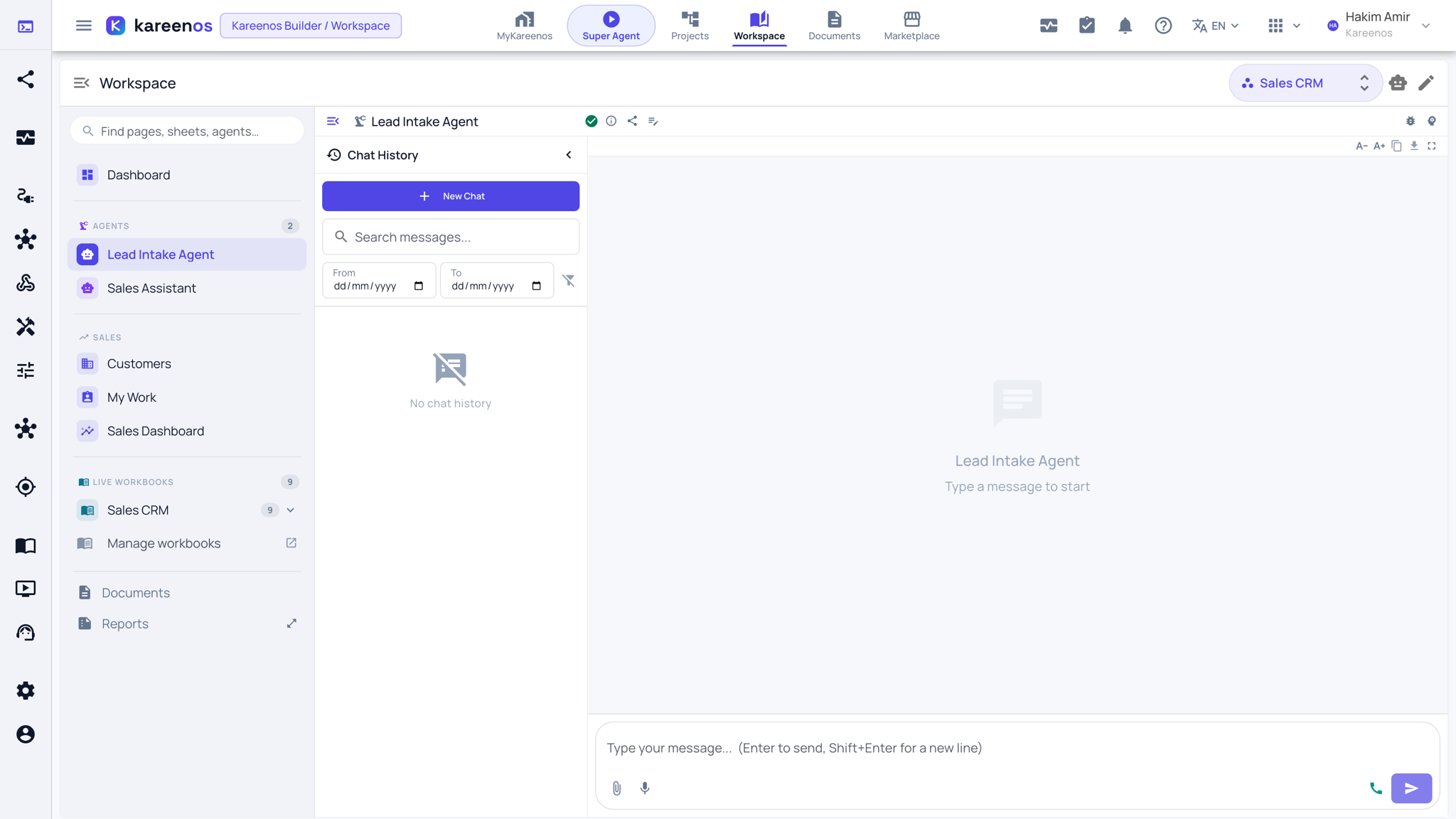
How the drawer is organised
A left-hand drawer holds sections, and each section holds pages. Dashboard is the pinned first entry of that same drawer. Every page carries a plain-English sub-description written for the person reading it, so nobody has to guess what "Fleet status" actually contains.
A page is built from Widgets: live tiles fed by your Live Workbooks. A tile can be a chart, a table, a counter, a map or a small summary, and it refreshes as the underlying data changes.
Showing and collecting
Pages present. When a person needs to type something, a link in the drawer or a button on a tile opens a pop-up dialog: an entry form, a search screen, or an Action that asks a short question. Buttons on a tile can also run a Job.
The rule of thumb is worth memorising:
Note
Pages present, dialogs edit, actions ask.
Step by step: building a page with the AI Builder
Open the Workspace and pick the project in the selector at the top right.
Press the robot button beside it. The AI Builder panel opens on the right, already holding the project and the current page in view.
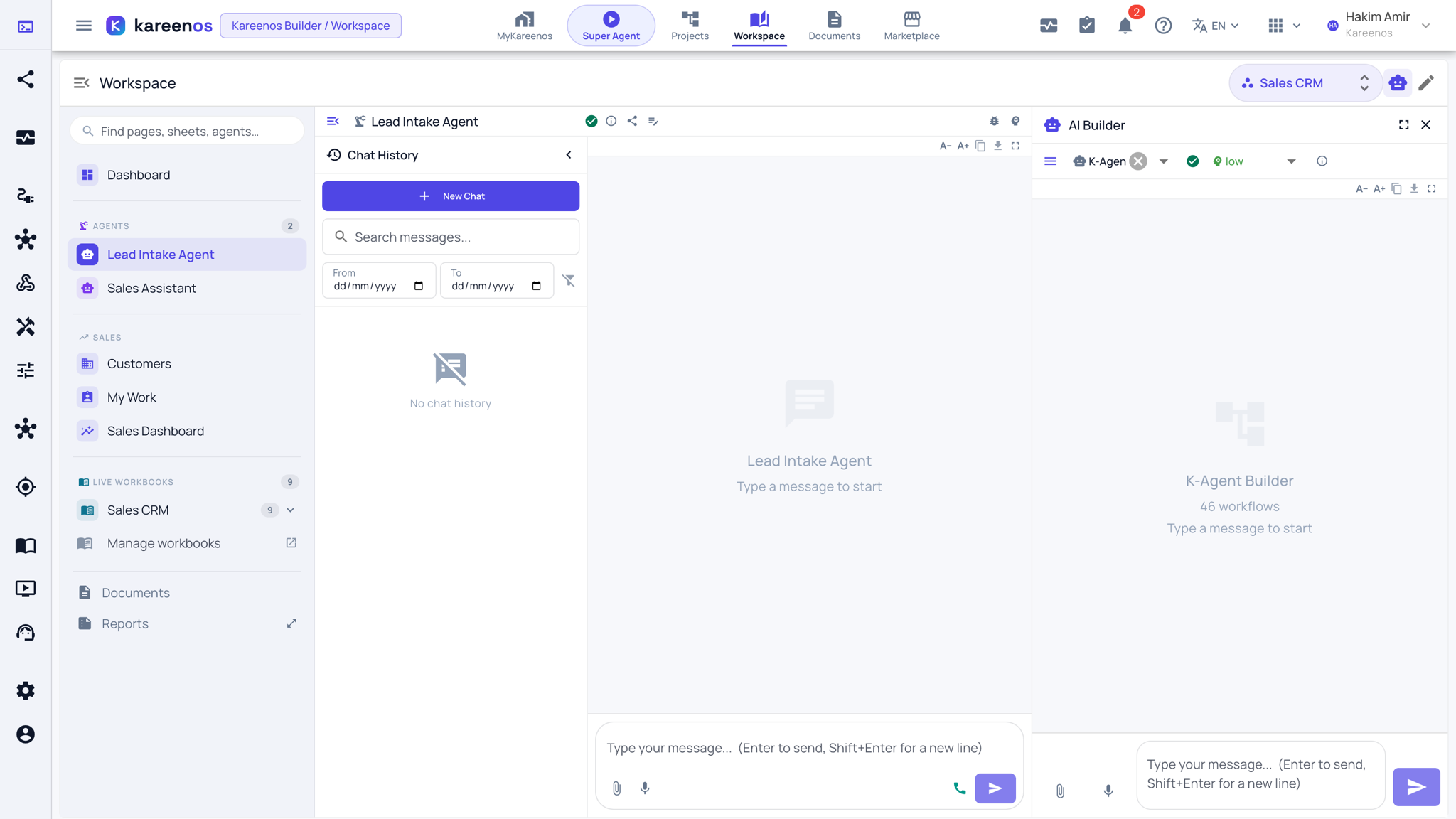
Describe the screen in words: "a Sales section with a Customers page showing open deals by stage and a button to add a lead". The builder creates the section, the page and its widgets, and the drawer refreshes when it finishes.
Open the new page and read the sub-description under its name. Change it if it does not say what the page is for.
Add drawer links for the entry and search screens people need, and buttons on tiles for the actions or jobs people launch from there. Ask the builder for these the same way.
Assign the section to the Teams that should see it, under Settings, Teams.
You can also open the pencil button to edit a page by hand.
Common mistakes
- Putting long forms directly on a page. Entry belongs in a dialog opened from a link or a button.
- Leaving the sub-description blank, which makes the drawer unreadable to anyone new.
- Forgetting Team assignment, so the page exists but nobody can open it.