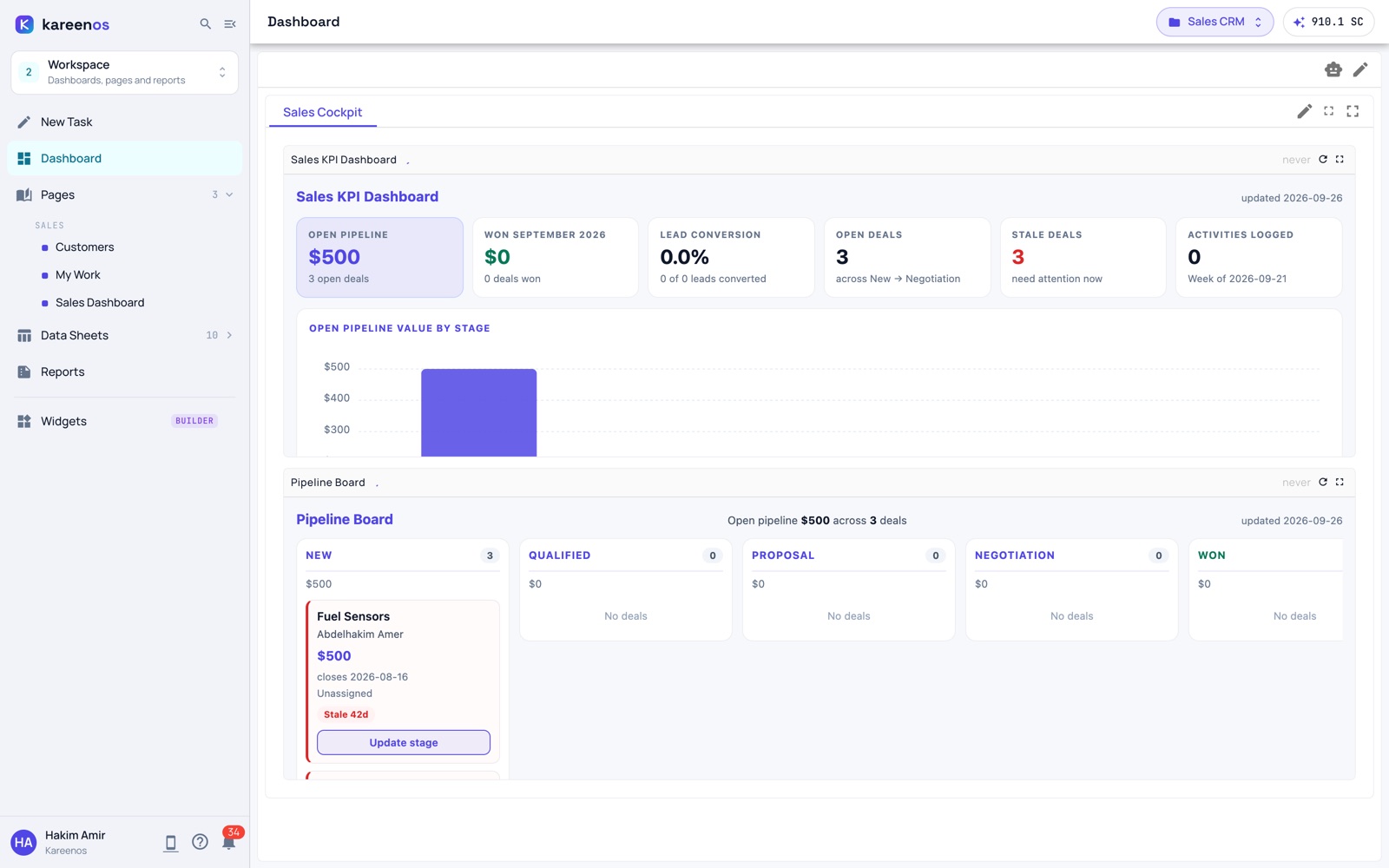
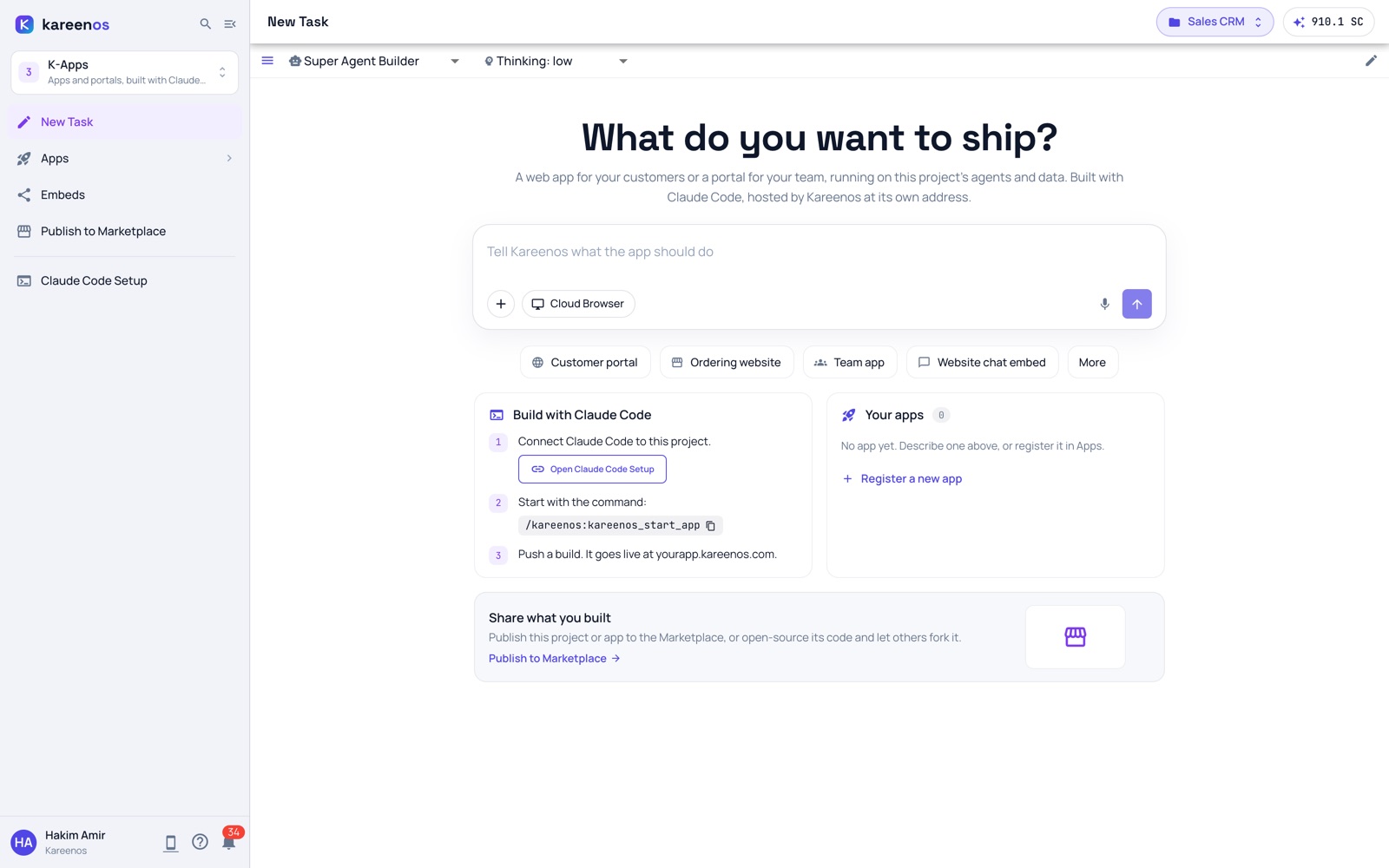
The platform, for the people who will run it

Eighteen months of agentic infrastructure. Shipped as Docker images.

One engine for building and running agentic business applications: agents that reason, jobs that execute, data, channels, vision, and location. The names below are Kareenos's; the concepts are ones you already run. Every section is a shipped subsystem, deployed on your infrastructure.

Node.js · PostgreSQL · Cassandra · Docker · Anthropic / OpenAI / Gemini / DeepSeek

The spine

Intent Bus: every event becomes a typed intent

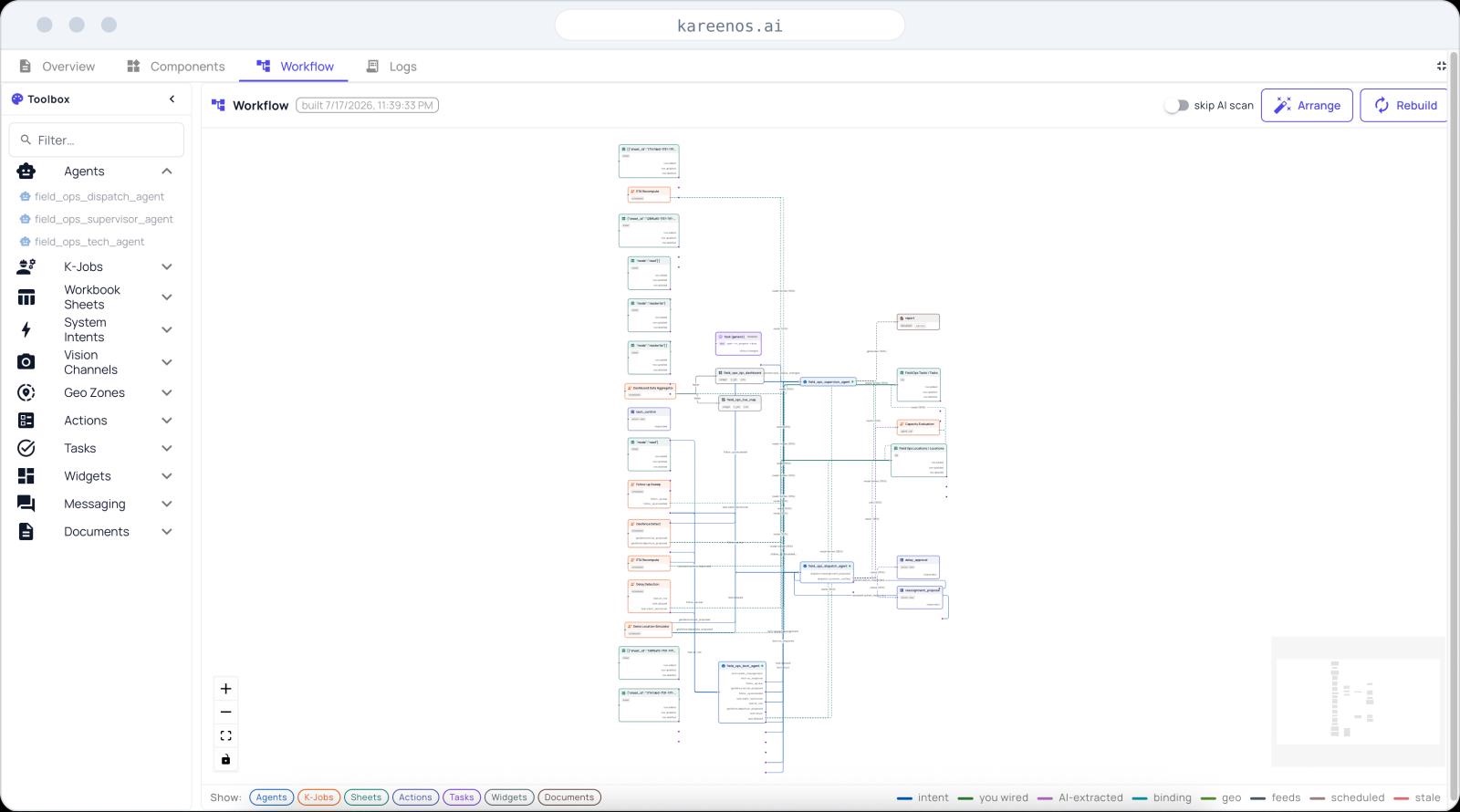
The nervous system of the platform. Operational events become lightweight typed intents on an internal bus: a message arrives, a GPS ping crosses a geofence, a row changes, a schedule slips. Agents and jobs subscribe; nothing is hard-coupled.

  • Agents never call agents directly. They publish intents
  • New consumers subscribe without touching existing workflows
  • Project-scoped fan-out: intents only reach same-project listeners
  • Built on a distributed work queue, horizontally scalable

event

geofence_exit

van_14 · 23:04 · site B

Intent Bustyped intent · project-scoped
After-hours Agentchecks schedule → calls driver
Owner Brief Agentlogs incident with context
Workbook Jobwrites event row

The workforce

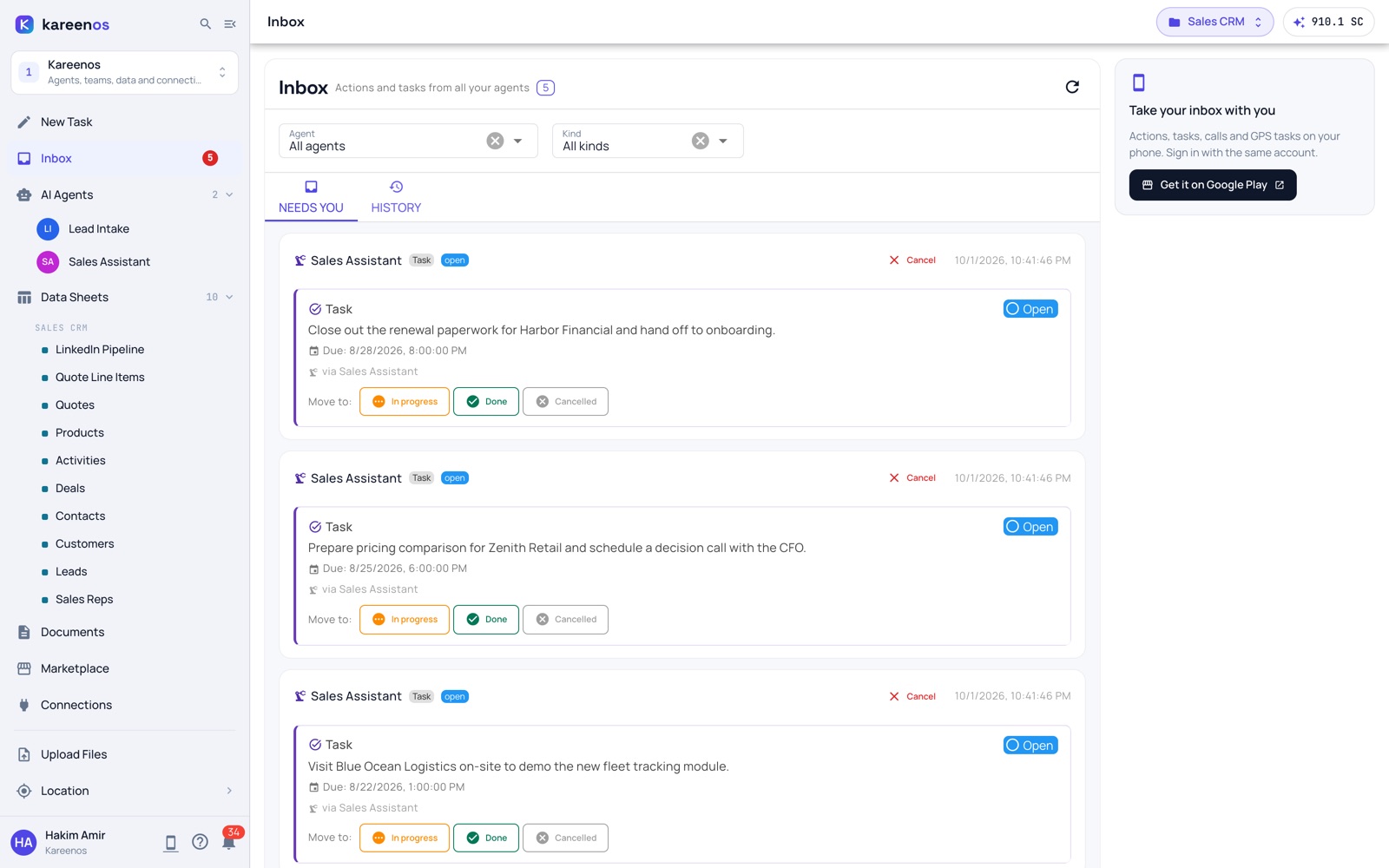
K Agents: tenant-scoped reasoning that acts

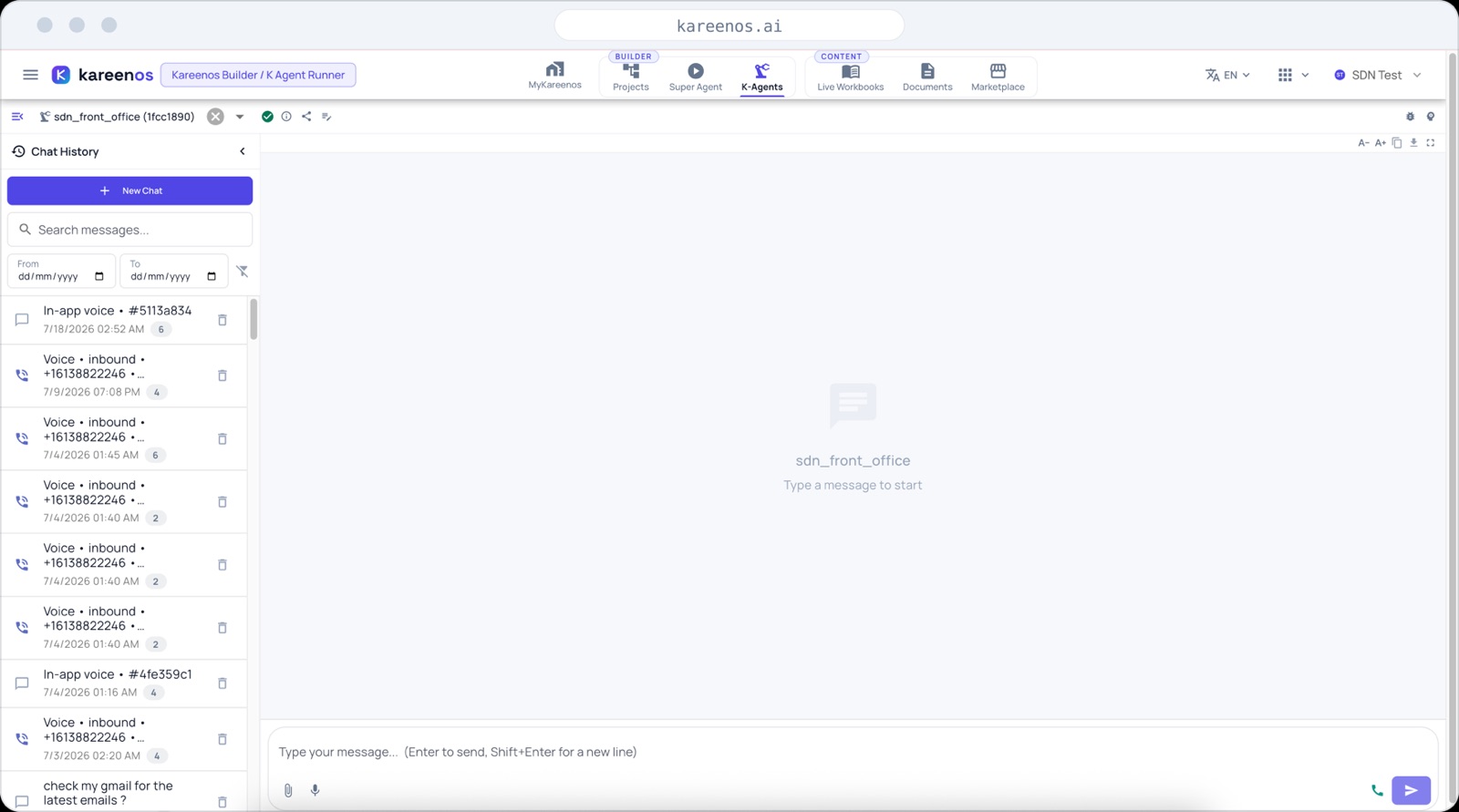
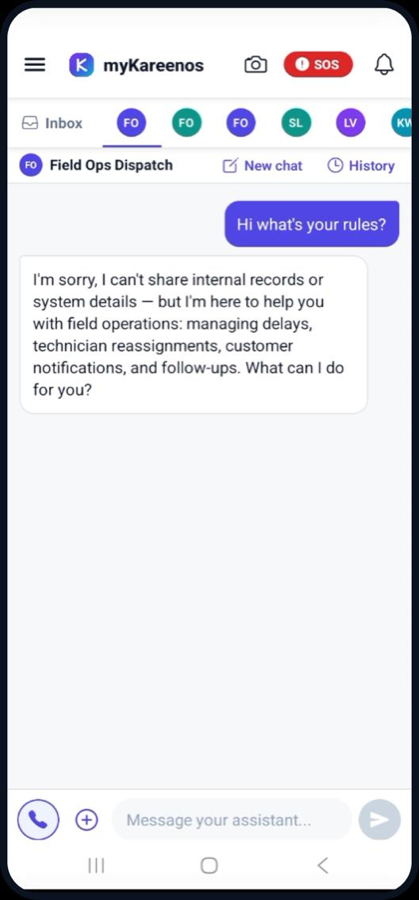
K Agents are the digital staff. Each one is subscribed to specific intents, holds a bounded tool list with explicit permissioning, and carries persistent memory. They reason, decide, escalate, and act continuously, not on demand.

  • Triggered by intents, chat, schedules, or other agents
  • Bounded tools per agent, so a minimal permission surface
  • Entry agents discover and dispatch skill agents at runtime
  • Two-tier memory: per-conversation session + cross-conversation long-term

Reason · Decide · Escalate · Act

The builder

Super Agents: the platform builds the platform

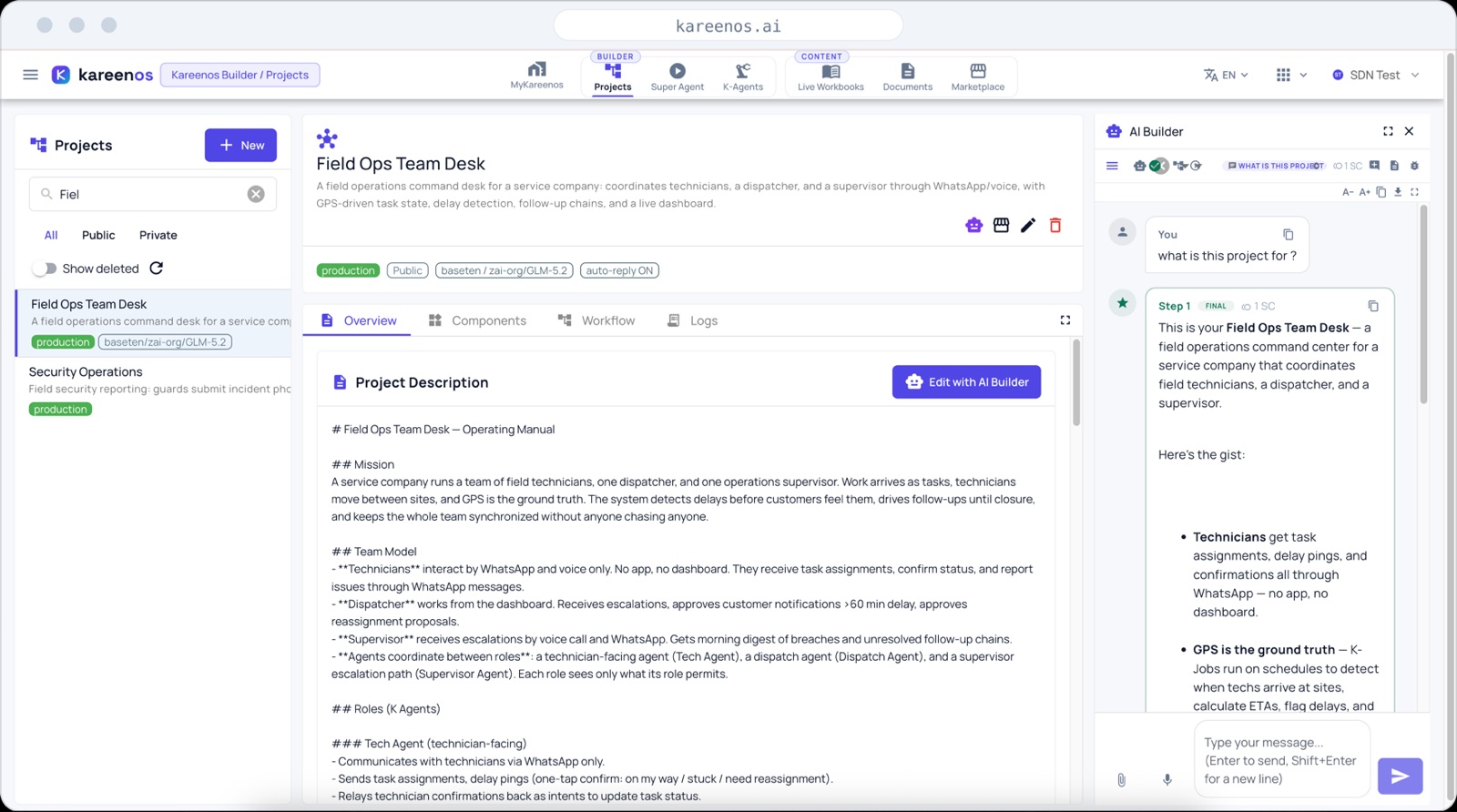
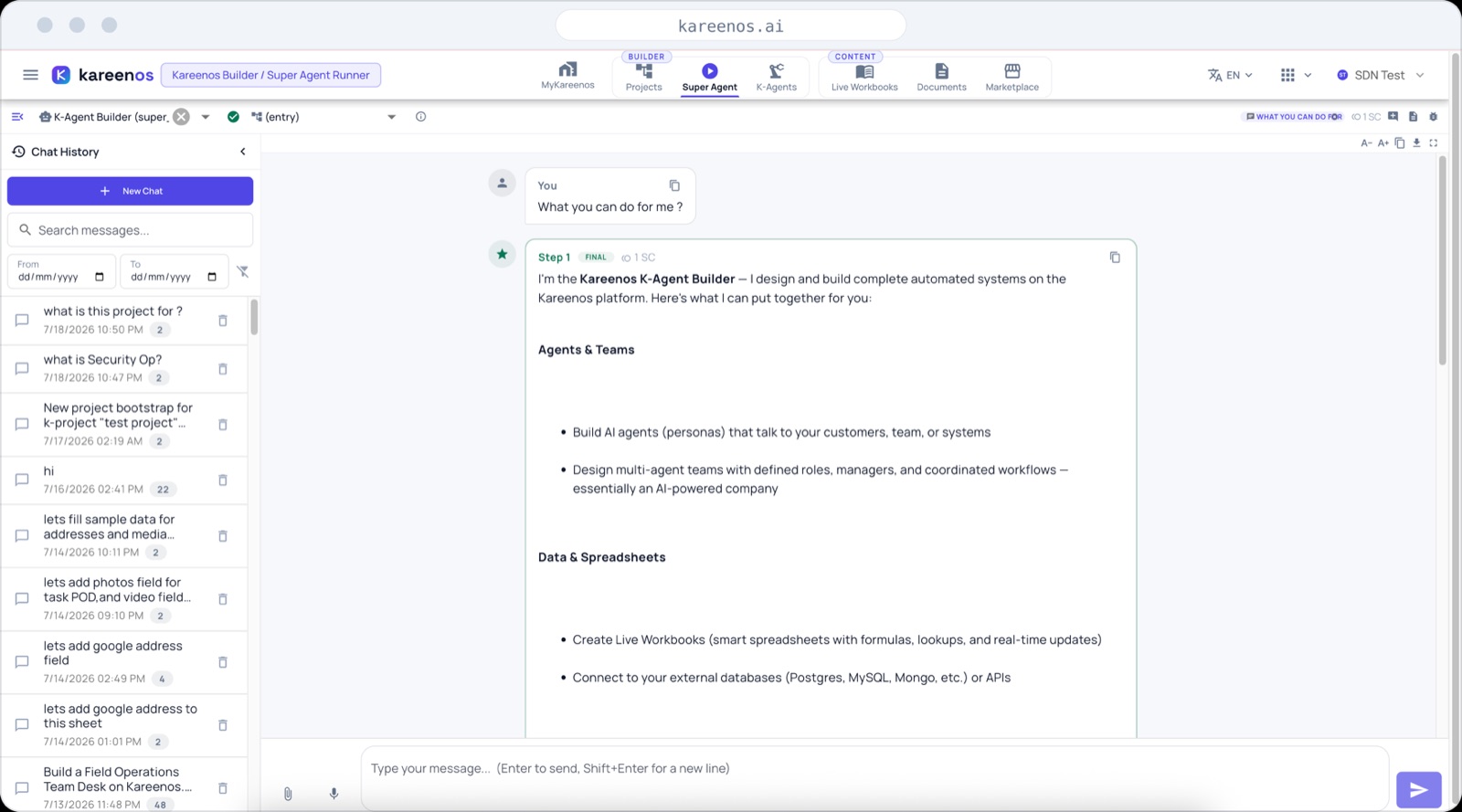
One umbrella Super Agent compiles natural-language requests into working systems: it creates K Agents, sheets, jobs, and data adaptors by discovering and dispatching reusable skills. Your customers describe the role they want to hire; the builder assembles it.

  • Natural language in, working agents and workflows out
  • Maps your database schema and generates adaptors automatically
  • Reusable skills library grows with every deployment
  • Never talks to end users: authoring only, runtime stays clean

Describe the role · Hire the agent

Deterministic muscle

K-Jobs: sandboxed JavaScript where determinism matters

Not everything should be an LLM call. K-Jobs run deterministic JavaScript in a resource-limited sandbox, with five trigger types: scheduled, intent, data-change, agent call, and persistent. Agents handle judgment; jobs handle clockwork.

  • Five triggers: cron, intent, workbook change, agent call, persistent
  • Sandboxed with timeouts, call-depth limits, and explicit per-job grants
  • Python tier via ctx.py.run: OR-Tools, numpy, pandas, scipy, networkx, torch
  • Agents and jobs call each other across the same project, within budget caps

event

payment_overdue

invoice 8841 · client B

AI Agent · reasons

tone: second reminder → schedule a call

Code Job · executes

deterministic · 84ms · plain code · no model

Agents reason. Jobs execute.

The data substrate

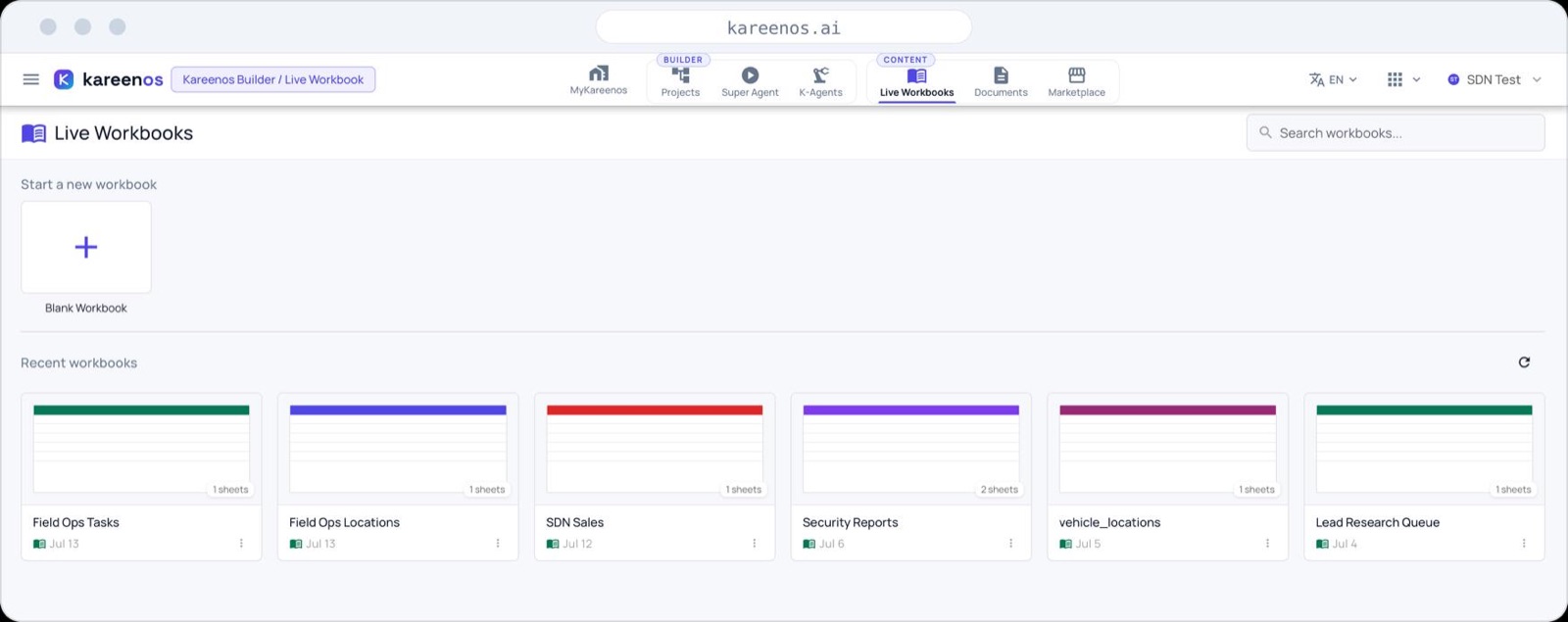
Live Workbooks: operational state agents can read and write

Spreadsheet-like workbooks with three storage engines behind one tool surface: Postgres for formulas, geometry, and lookups; Cassandra for high-volume time-series; adaptors for external read-only data. State, history, and time-series, always live.

  • Workbook → sheet → column → row, collaborative in real time
  • Postgres engine: formulas, geometry, cross-sheet lookups
  • Cassandra engine: telematics-grade event volume
  • Same agent tools regardless of engine
open_shiftsvisits live

agent edited 1 row · 5:52 a.m.

Your database, activated

Data Adaptors: read your schema, never touch your data

Read-only connectors expose your existing Postgres, MySQL, MSSQL, Cassandra, Mongo, REST, or GraphQL systems as live sheets. The Super Agent reads your schema and generates them automatically. Write patterns are rejected by construction.

  • Postgres, MySQL, MSSQL, Cassandra, Mongo, REST, GraphQL
  • Generated automatically from your schema in minutes
  • Sandboxed and read-only: writes are rejected, not just discouraged
  • Your data never leaves your environment

Read-only · Auto-generated · In place

Your tools, agent-callable

Partner Tools: your systems become agent capabilities

Author tools against your own databases and services, and grant them to agents exactly like built-ins. Every call is identity-mapped: the acting user’s account resolves to your system’s identifiers at runtime, so a tool call runs as that customer, never as a shared login.

  • Partner-authored tools alongside the built-in catalog
  • Granted per agent, with the same permission model as every other tool
  • Per-account identity mapping resolves your system’s IDs at call time
  • Tool calls observable as intents, like all platform activity

Your API · Their agent · Mapped identity

Institutional knowledge

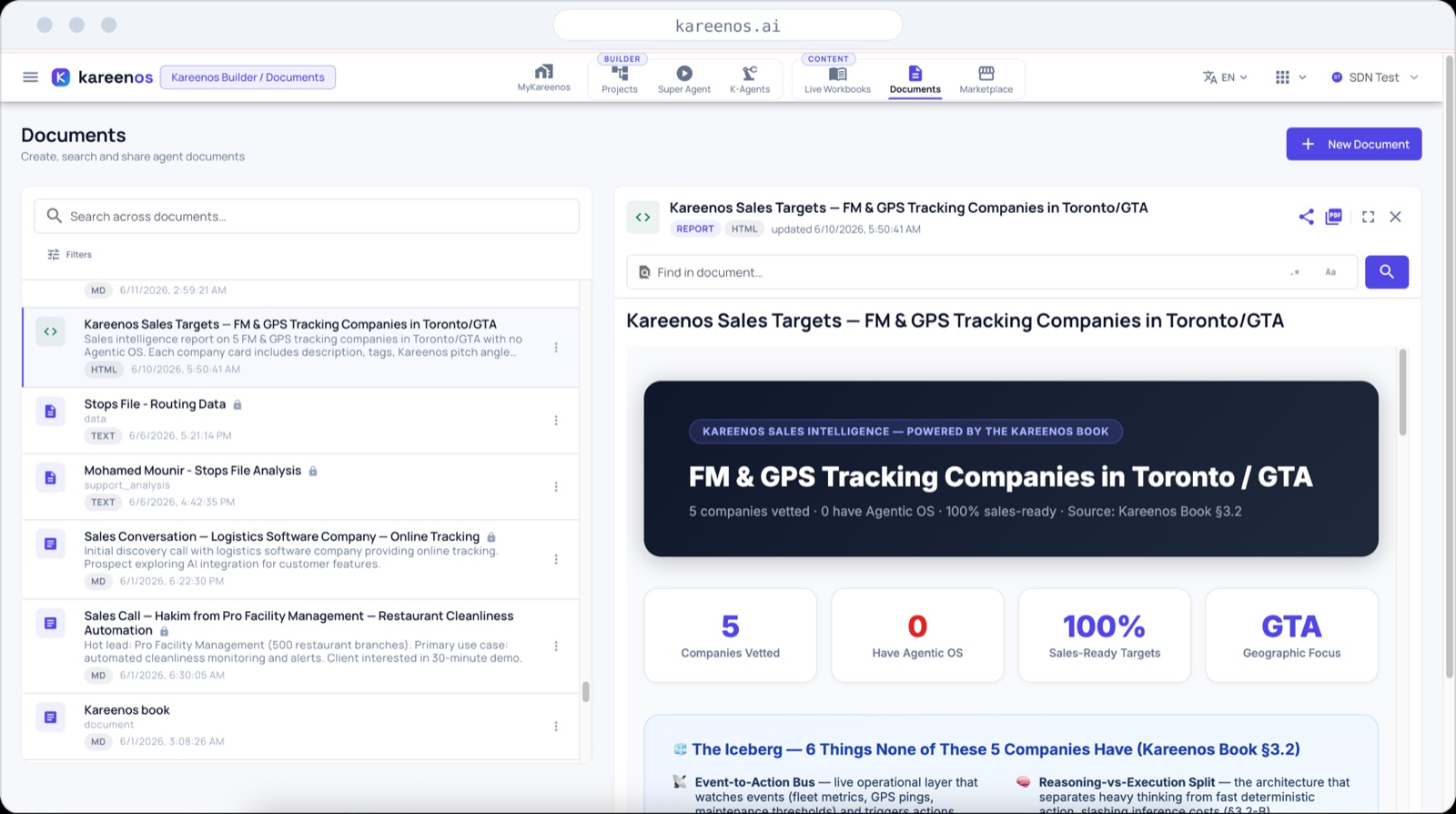
K-Documents: the knowledge agents work from

A document store with full-text search in English and Arabic, ownership and privacy controls, and public share tokens. SOPs, policies, contracts, and reports become searchable context agents cite and enforce.

  • Markdown, HTML, and text with auto-extracted searchable content
  • Bilingual full-text search (English + Arabic)
  • Per-document ownership and privacy
  • Public share links with revocable tokens

SOPs · Policies · Evidence

Follow-through

Scheduled Callbacks: agents that remember to follow up

An agent can schedule its own future wake-up: “check this quote again Thursday,” “confirm the sub on Sunday evening.” Callbacks are persisted durably, claimed exactly once across replicas, and delivered at-least-once with retry.

  • Agents register their own future wake-ups with payloads
  • Durable queue that survives restarts and deploys
  • Claim-once semantics across multiple workers
  • Retry with exponential backoff on failure

Tuesday’s promise, kept Thursday

Continuity

Memory: context that survives the conversation

Two tiers: session memory scoped to a conversation, and long-term memory that persists across conversations with TTL. Long runs stay sharp through conversation compaction. Old slices are summarized once, preserving names, decisions, and outstanding work.

  • Session + long-term tiers, append-only and auditable
  • Compaction keeps multi-day runs within token budgets
  • Names, decisions, and open items preserved through summaries
  • Memory rules injected per agent via system rules

Session · Long-term · Compaction

Where people already are

Messaging Engine: WhatsApp, Telegram, SMS, email

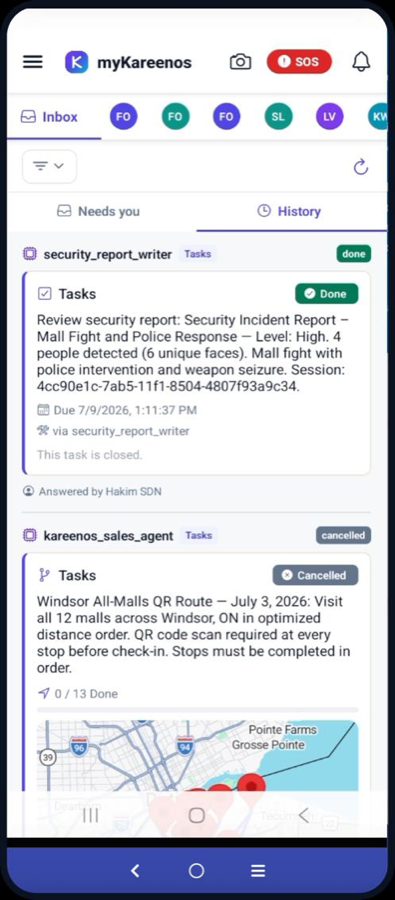
Inbound messages become intents that wake agents; outbound messages are queued, tracked, and persisted with media. Field staff answer voice notes on WhatsApp; owners get email digests; customers get SMS updates. All of it lands in one conversation history.

  • WhatsApp, Telegram, SMS, and email, two-way
  • Media (photos, documents, voice notes) persisted to object storage
  • Auto-reply pipeline lets cost-efficient models handle volume
  • Every message indexed and auditable
Shift Coverage Agent online · acting
0:10“Can’t make my 6 a.m. shift, sorry…”
Got it, Sara, feel better. I’m contacting 3 qualified caregivers near the client now.
Shift covered · Maria T. confirmed · 5:52 a.m.

Real-time calls

Voice Channel: agents that answer the phone

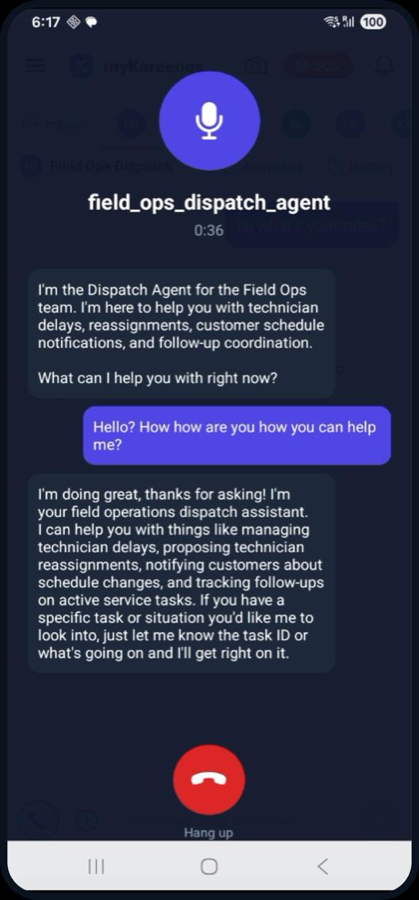
A dedicated real-time audio loop: streaming speech-to-text in, agent reasoning, streaming text-to-speech out. Callers hear the first sentence while the rest is still generating; barge-in interrupts cleanly; agents transfer callers to other agents mid-call.

  • Twilio media streams with streaming STT (Deepgram)
  • Streaming TTS (ElevenLabs / Deepgram) with sentence-level latency
  • Barge-in: callers can interrupt naturally
  • Warm agent-to-agent transfer on the same call
Inbound · Reception Agentlive call · 02:34streaming

Caller “…can someone be there before noon?”

Agent “Yes, I’ve got a technician 14 minutes away. Booking him now, you’ll get an SMS confirmation.”

Attended automation

Browser Channel: agents acting in the user’s own browser

Agents navigate, read, fill, and click in a user’s signed-in browser session, with the user present and a server-held approval gate on sensitive actions. No credentials stored, no headless ghosts: attended automation with an audit trail.

  • Navigate, read, click, fill, screenshot, scroll
  • Server-held approval gate for clicks
  • User’s own session, no stored credentials
  • Per-project policy toggle

The user’s browser, supervised

The engine sees

Vision Runtime: photo sessions become detections agents judge

A capture session, a batch of photos plus an optional voice note, uploads into a named vision channel. The voice note is auto-transcribed, the session fires its channel intent, and every bound processor wakes: K-Jobs run detection models over the photos, K-Agents judge the detections together with the transcript.

  • Capture sessions: photo batches + voice note, from mobile or web
  • Named vision channels: each finalized session fires a typed intent
  • K-Jobs run YOLO26 object detection and InsightFace embeddings in the Python tier
  • Multiple processors share one session payload: detections, transcript, verdicts
Dock Cameracapture session · 3 photos + voice notesession 4c1a

voice note → “third bay, check the damaged crate”

session ready → 2 subscribers woke · YOLO26 + judging agent

The engine knows where

Location Runtime: geofences, live tracking, and routes as intents

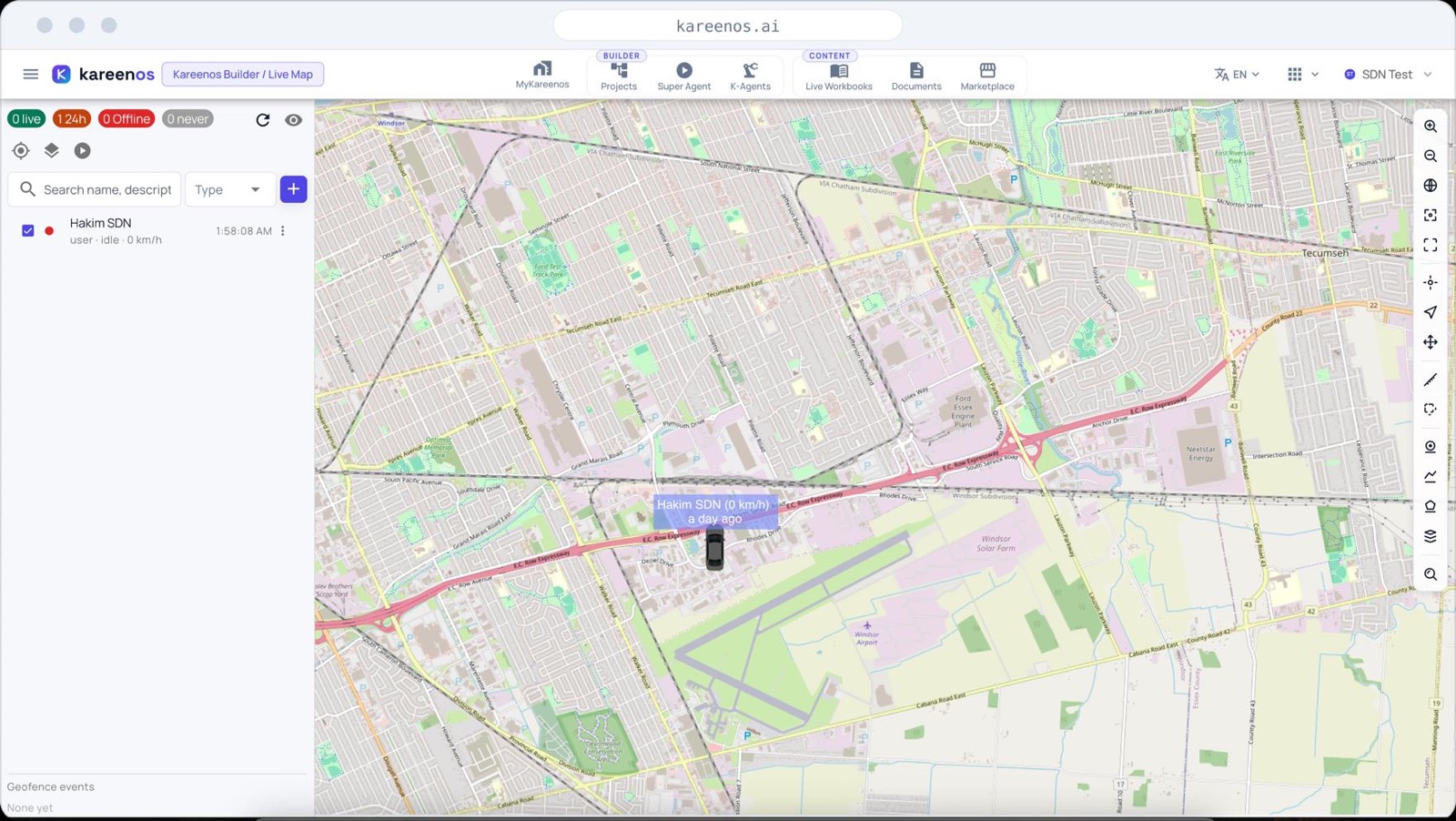
Any object can be tracked live: a user, a vehicle, a workbook row. Geofence zones are drawn as points, lines, or polygons with dwell logic; entries and exits fire edge-triggered intents, and durable geo-callbacks wake the agents and jobs you bind to them.

  • Live tracking with a live map and historical playback
  • Zones with dwell logic: checkin/checkout fire once per entry and exit
  • Geocoding, reverse geocoding, and driving routes up to 23 waypoints
  • OR-Tools route optimization in the Python tier: about 1–2s for 30 stops
Fleet Watch Agentvan 14 · re-routed around delayETA 11:42
zone: site-b

zone entered → check-in task created · route re-optimized in 1.2s

Model-agnostic

Multi-model: Anthropic, OpenAI, Gemini, DeepSeek

One normalized model configuration, translated per provider at request time. Default to Claude with prompt caching; route high-volume work to cost-efficient models; a vision pre-processor closes the gap for text-only models. Upgrade-safe as the model market shifts.

  • Provider-agnostic config: swap models without rebuilding agents
  • Anthropic prompt caching: ~10× cheaper repeated context
  • Vision pre-processor for text-only models
  • Mix premium and budget models per agent, per task

One schema · Every provider

Isolation by construction

Security: tenant isolation and encryption at rest

Nested tenancy (partner, account, project) with the project as a hard runtime boundary: intents fan out only to same-project listeners. Secrets and tokens are encrypted at rest, with master keys held in your own key management.

  • Project isolation enforced by the runtime, not by convention
  • Secrets encrypted at rest; master keys stay in your KMS
  • Per-agent tool grants keep the capability surface minimal
  • Approval gates on sensitive channels

Partner → Account → Project

The backbone

PostgreSQL + Cassandra: scale without ceilings

Postgres holds the relational truth: agents, projects, workbooks, documents. Cassandra absorbs the volume of messages, memory, events, calls, and files, partitioned per tenant and replicated multi-DC. Stateless web and worker tiers scale horizontally.

  • Postgres for authoring and relational state
  • Cassandra for high-volume operational streams
  • Multi-datacenter replication
  • Stateless HTTP and worker processes: add nodes, not rewrites

Relational truth · Unbounded volume

Yours to run

Deployment: Docker images in your infrastructure

Three core processes (web server, jobs engine, messaging engine) plus dedicated real-time servers for voice and browser channels. Pull the images into your VPC, on-prem cluster, or cloud account. Connect your database. Brand it. Thirty minutes.

  • Ships as Docker images, deployed in your environment
  • Your VPC, your cloud, your data center
  • Stateless processes behind your load balancer
  • Customer data never leaves your environment

Pull · Connect · Brand · Live

Active today, not a roadmap

The integrations your partners
get on day one.

Every integration below is live in the platform now, the same catalog your admins see in the API Keys console.

AI Models

Anthropic

Claude models with prompt caching. The platform default.

OpenAI

GPT models, Whisper STT, and vision fallback.

Google Gemini

Gemini models for reasoning and multimodal runs.

DeepSeek

Cost-efficient models for high-volume agent work.

Speech & Audio

Deepgram

Streaming speech-to-text tuned for phone audio, plus TTS.

ElevenLabs

Natural streaming text-to-speech for live calls.

Voice & Telephony

Voice Streaming (Twilio)

Real-time phone calls: callers talk to agents, agents transfer mid-call.

Messaging Channels

WhatsApp

Two-way conversations, media, and voice notes.

Telegram

Bots and group coordination.

SMS

Reach anyone with a phone number.

Email

Inbound triggers agents; outbound tracked.

Maps & Location

Google Maps

Geocoding, routing, distance, and GIS tools for agents.

Search

Google Search

Agents research the open web when the job needs it.

Account Linking

Google Workspace

Gmail, Calendar, Drive, and Sheets with per-user OAuth.

Microsoft 365

Outlook mail and calendar with per-user OAuth.

For your engineering team

Thirty minutes with your CTO.
We bring a running sandbox.

We'll deploy Kareenos against a sample of your schema before the call. You get the technical deployment spec, the architecture deep-dive, and a working environment to poke at.