01
Your end clients build
They expand your platform with their own ideas and requirements, in plain English or their own language.
What is Kareenos
Kareenos is your on-premises agentic operations platform. Not a chatbot, not a copilot. An agentic engine that runs your operations, shipped as Docker images on your infrastructure.
Node.js · PostgreSQL · Cassandra · Docker · Anthropic / OpenAI / Gemini / DeepSeek
The big picture
Your end-clients' teams and customers live on Kareenos surfaces: web app, mobile app, messaging, voice. The engine reasons in the middle. Your platform's databases and APIs stay the source of truth.
Inside the engine
The authoring layer produces and versions artifacts: one Super Agent, guided by system rules and memory. The runtime layer executes live workflows. Everything below on this page is one of these blocks, shipped.
Authoring layer
produces and versions artifacts
Super AgentSystem RulesMemoryRuntime layer
executes live workflows
Who it's designed for
01
They expand your platform with their own ideas and requirements, in plain English or their own language.
02
No code, no training. They describe what they need, and it runs.
03
They design new features once, then ship them to every client through the Kareenos marketplace.
What people build
field operations
Job assignment, shift compliance, proof of delivery. A vehicle stops too long, an agent investigates and briefs the supervisor.
customer communication
Agents that answer WhatsApp, take phone calls, chase unpaid invoices, confirm appointments, and follow up when nobody replies.
fleet & assets
Unauthorized zone entry triggers verification, evidence compilation, and notification, automatically.
security & guards
Patrol verification, incident reporting with photo evidence, escalation chains that run themselves.
home care & workforce
Visit confirmations, missed check-in escalations, schedule changes communicated across staff and families.
back office
Live sheets that update themselves, reports that write themselves, records that are audit-ready without anyone assembling them.
Why Kareenos for my business
01
Every platform since the 90s needed a database engine. Nobody built their own.
02
Every vertical platform from 2026 needs an agentic engine. Nobody should build their own.
03
A partner improves your engine daily. Your platform stays ahead without hiring an AI team.
04
Every token your clients consume is money for you, on top of your subscription.
05
Stop selling tracking. Start selling intelligence.
06
The agentic era is here. Sell tokens today, not tomorrow.
Ownership
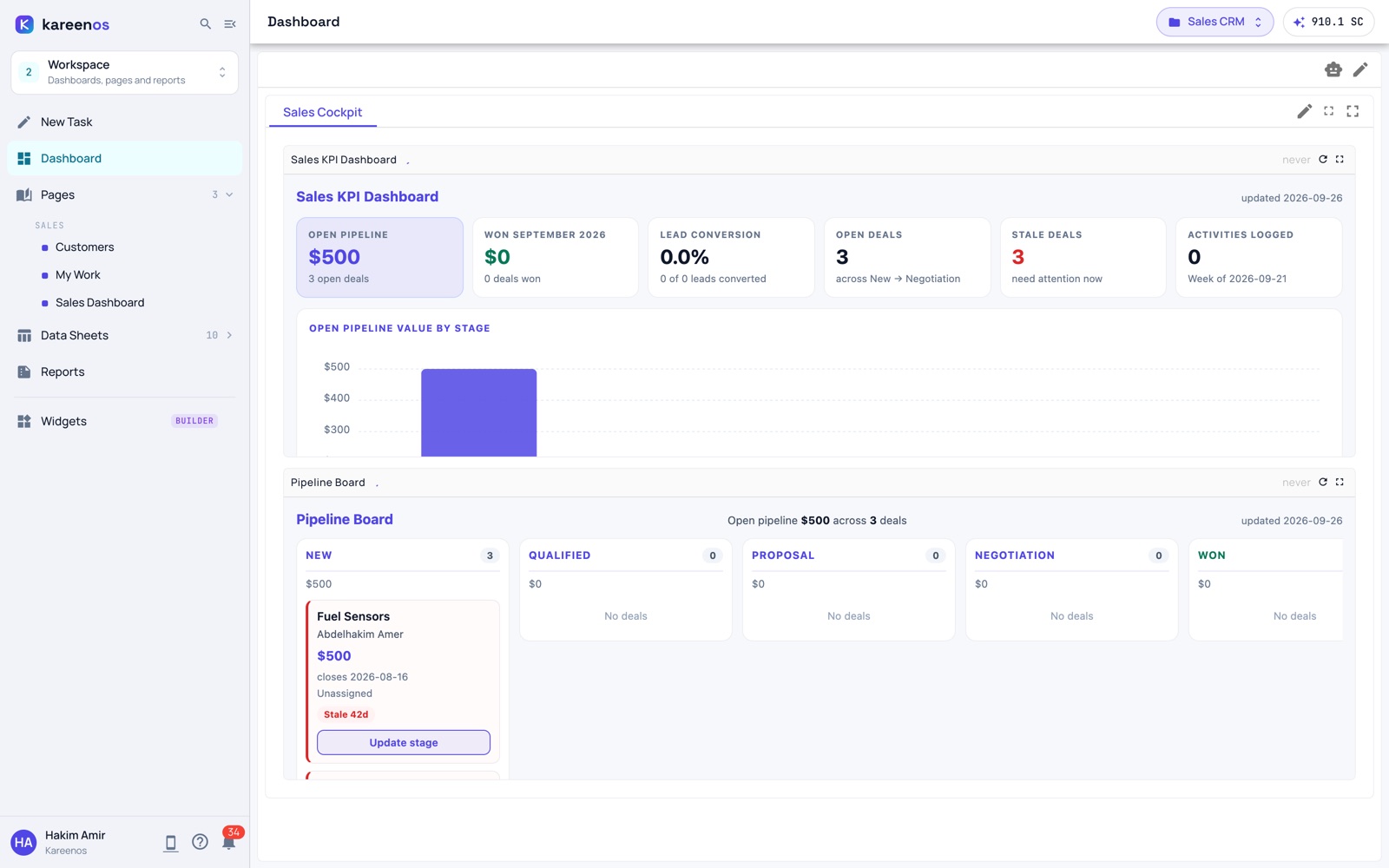
The team app
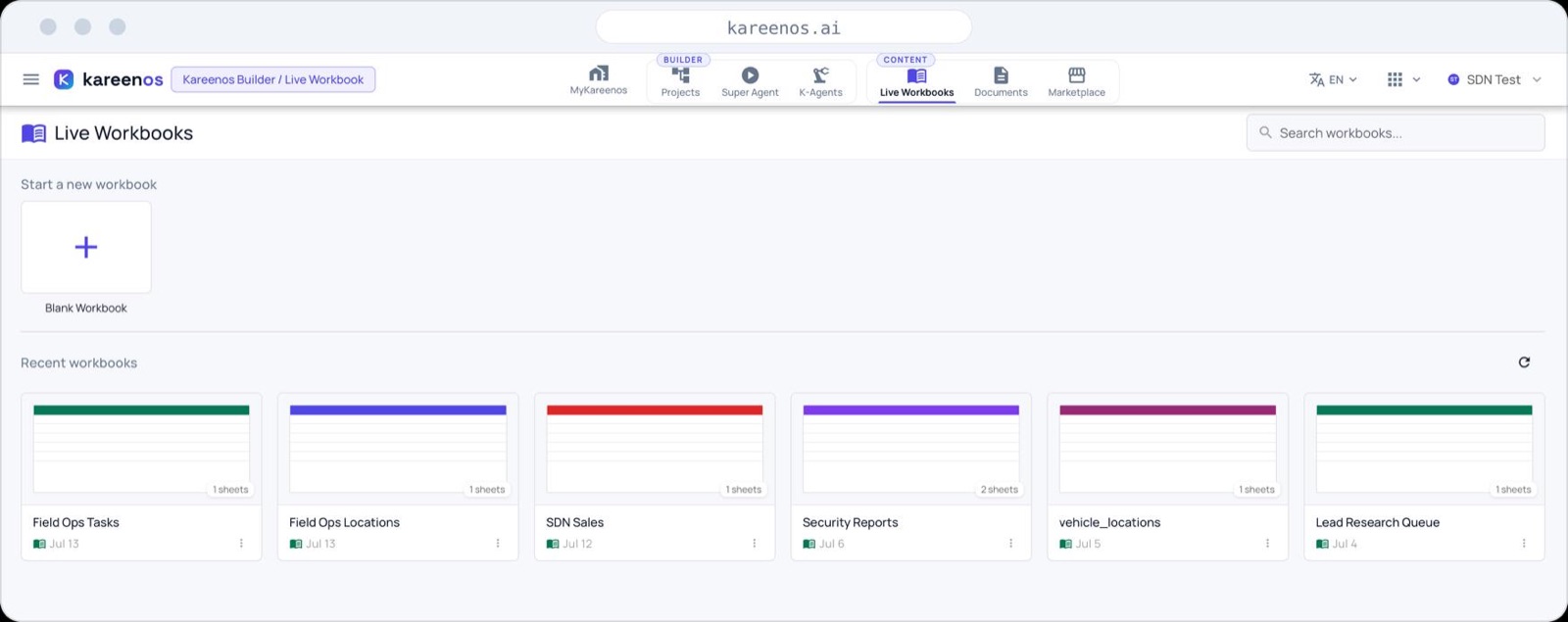
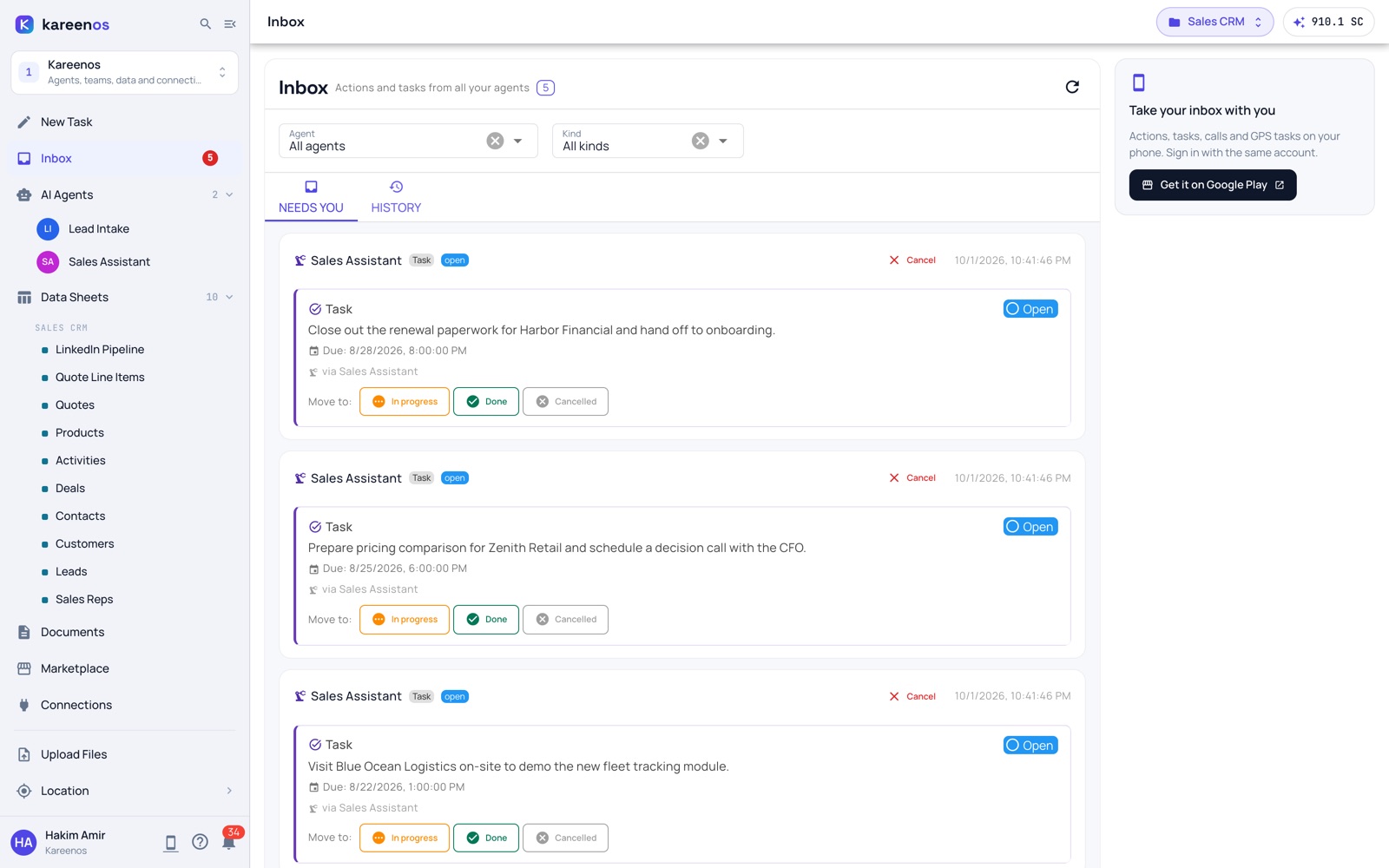
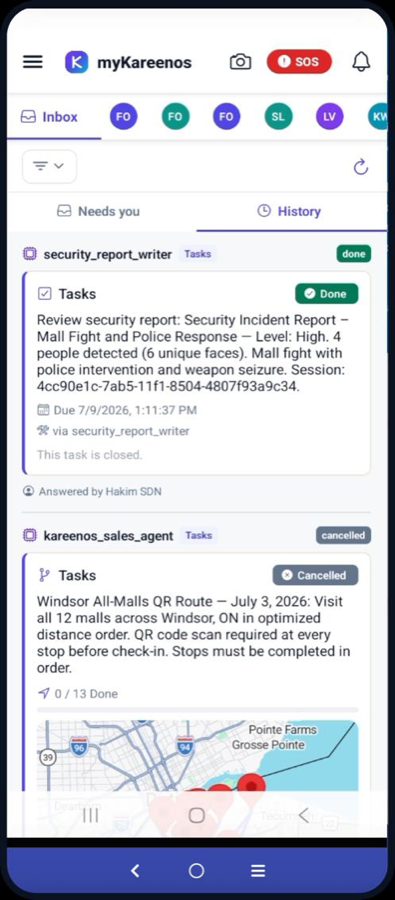
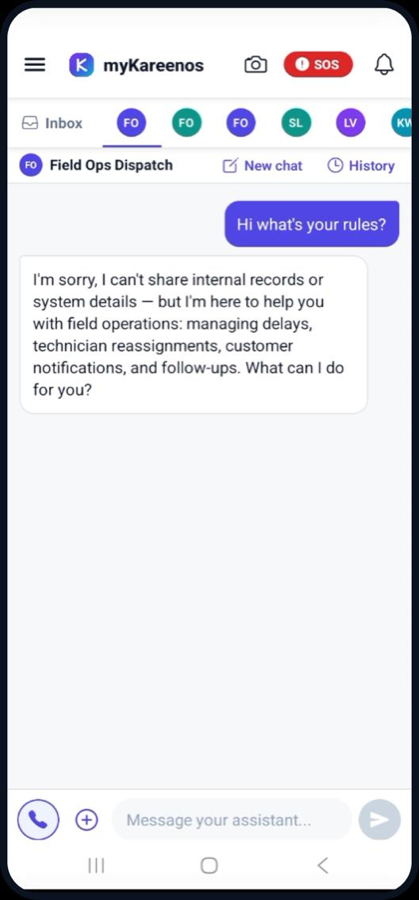
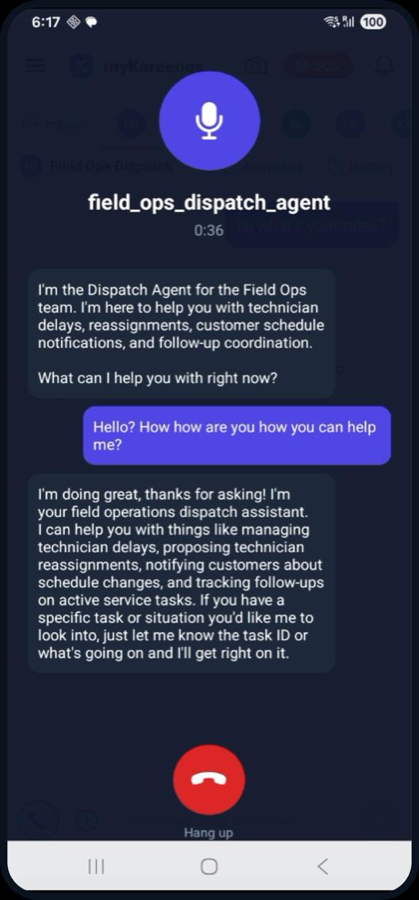
A simple web and mobile app for your end-clients’ teams. Agents generate tasks and follow up; people respond by chat, voice, or one tap. Tasks arrive with proof built in: photos, scans, signatures, and live location when the job needs them.

myKareenos mobile · tasks, chat, realtime voice


The container
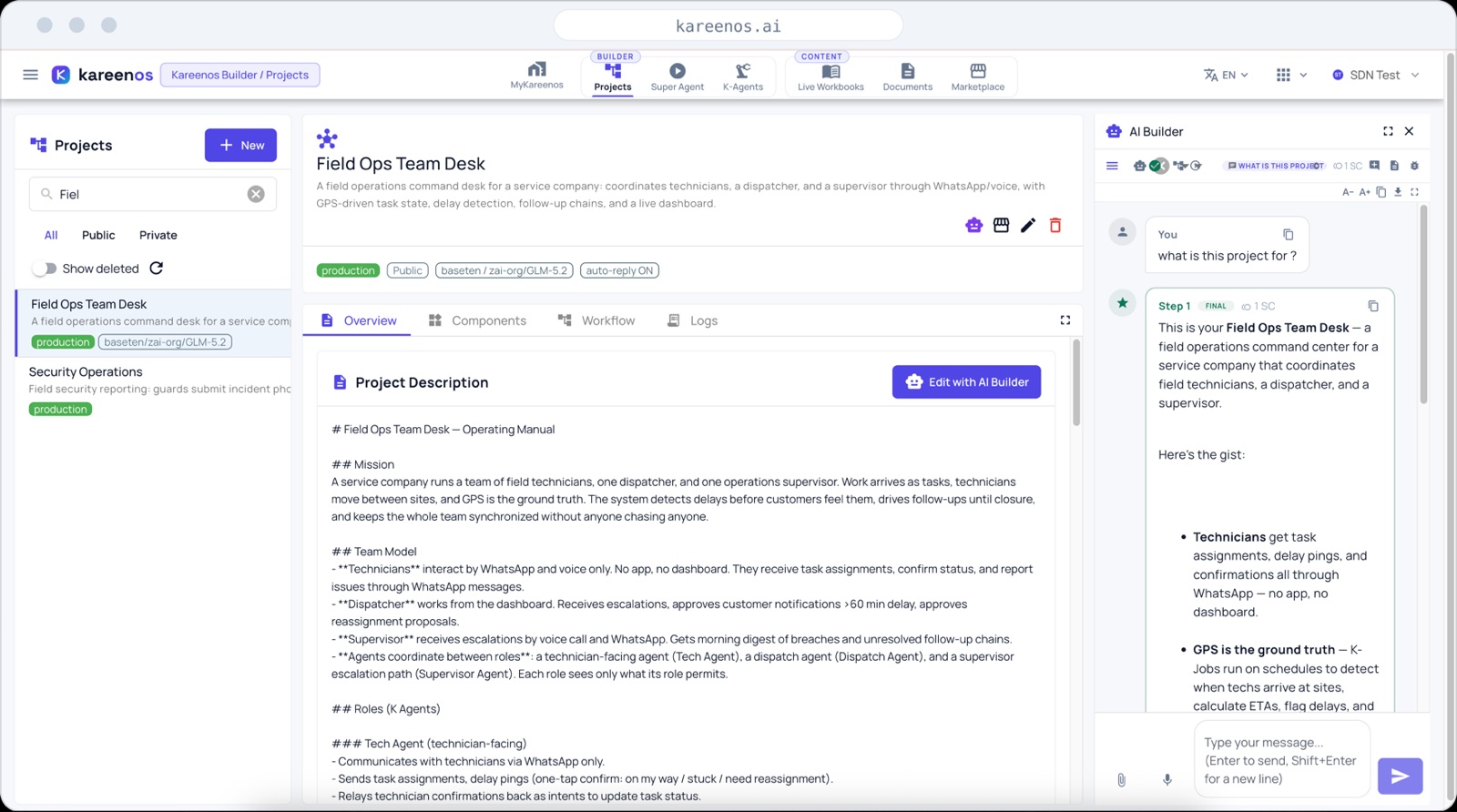
Agents, documents, channels, connections, jobs: everything lives inside a project, and everything inside works together. Nothing ever crosses between projects. A project is the agentic company: one operational umbrella, one hard isolation boundary.

The map
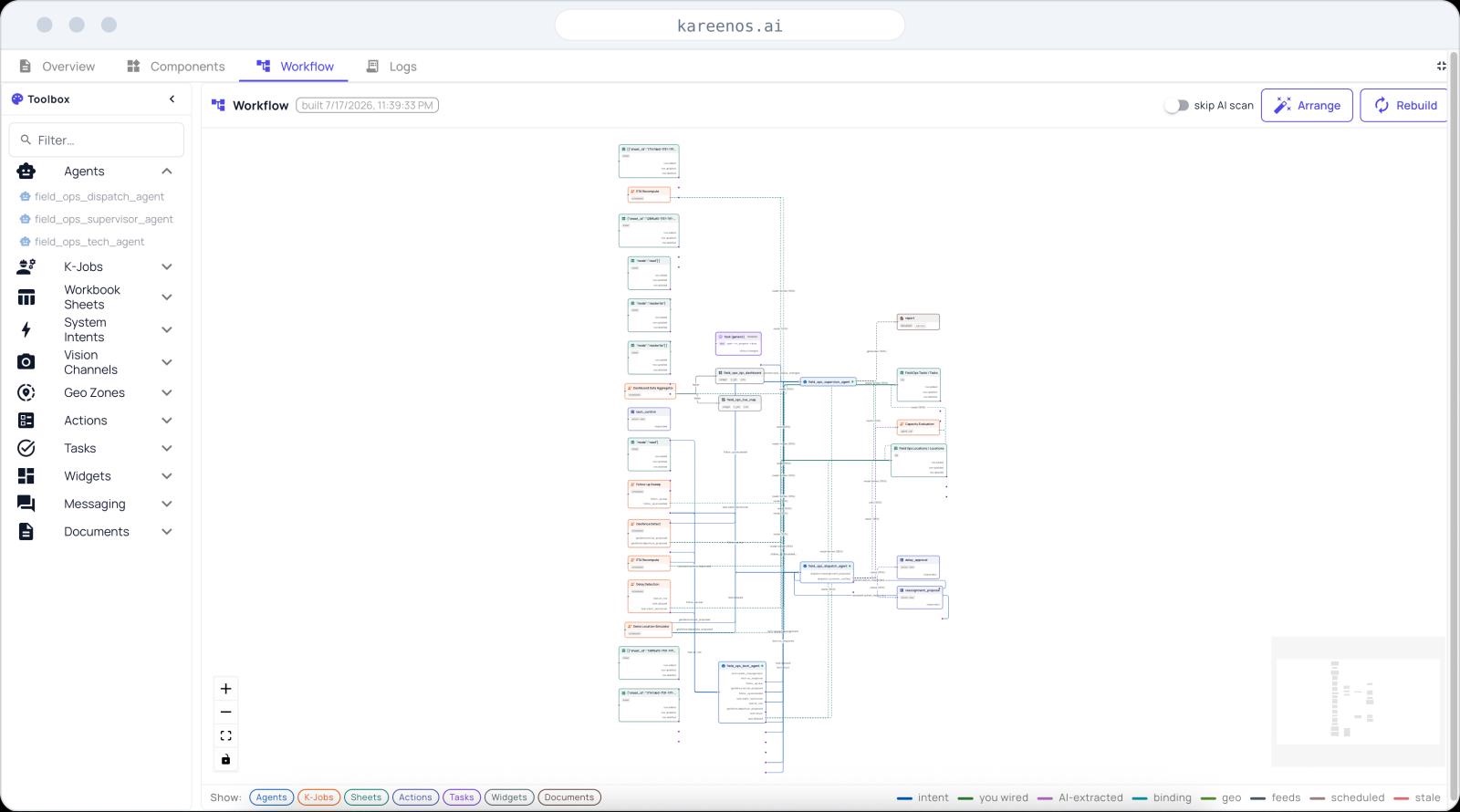
Every project has a live workflow view. This is what your client’s plain language becomes: nobody drew the diagram. The client described what they needed, and the engine built the agents, jobs, sheets, and connections behind it. And it stays editable, directly, anytime.

The architect
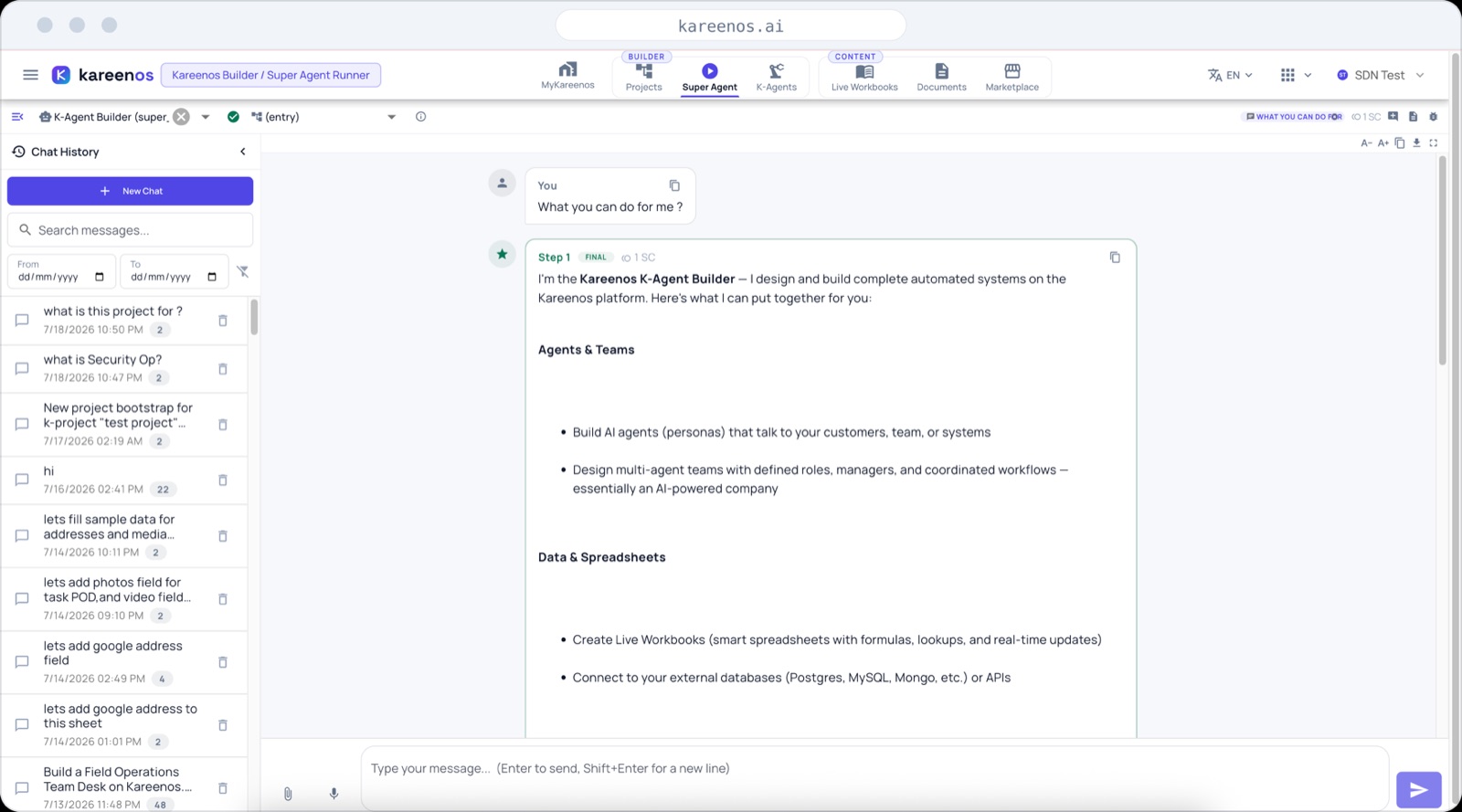
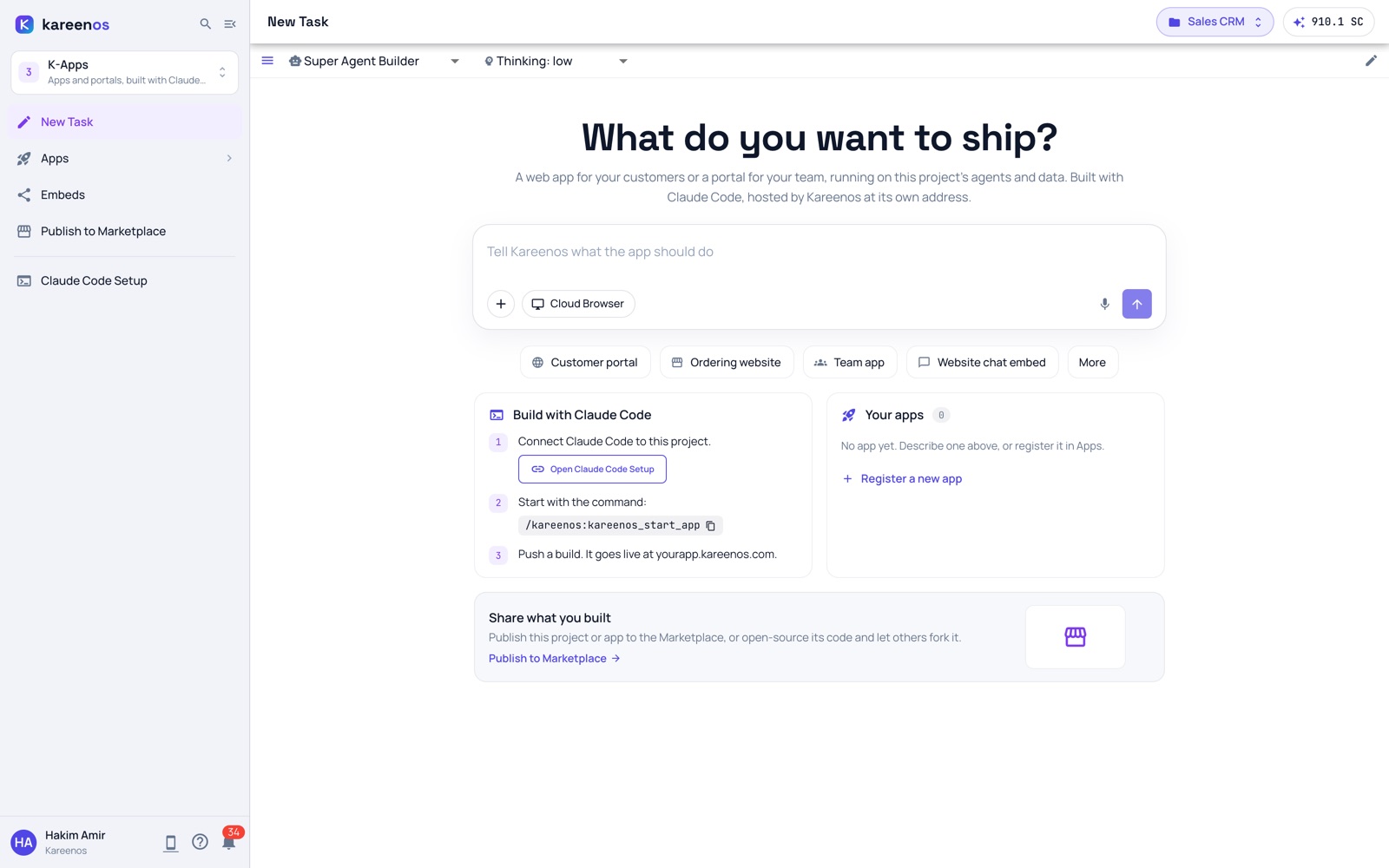
Your client talks to the Super Agent in plain language, and it designs the project: agents, jobs, sheets, workflows, connections. It is the architect, not a worker. It never sits in the operations flow. It builds the company, then the company runs itself.

The workforce
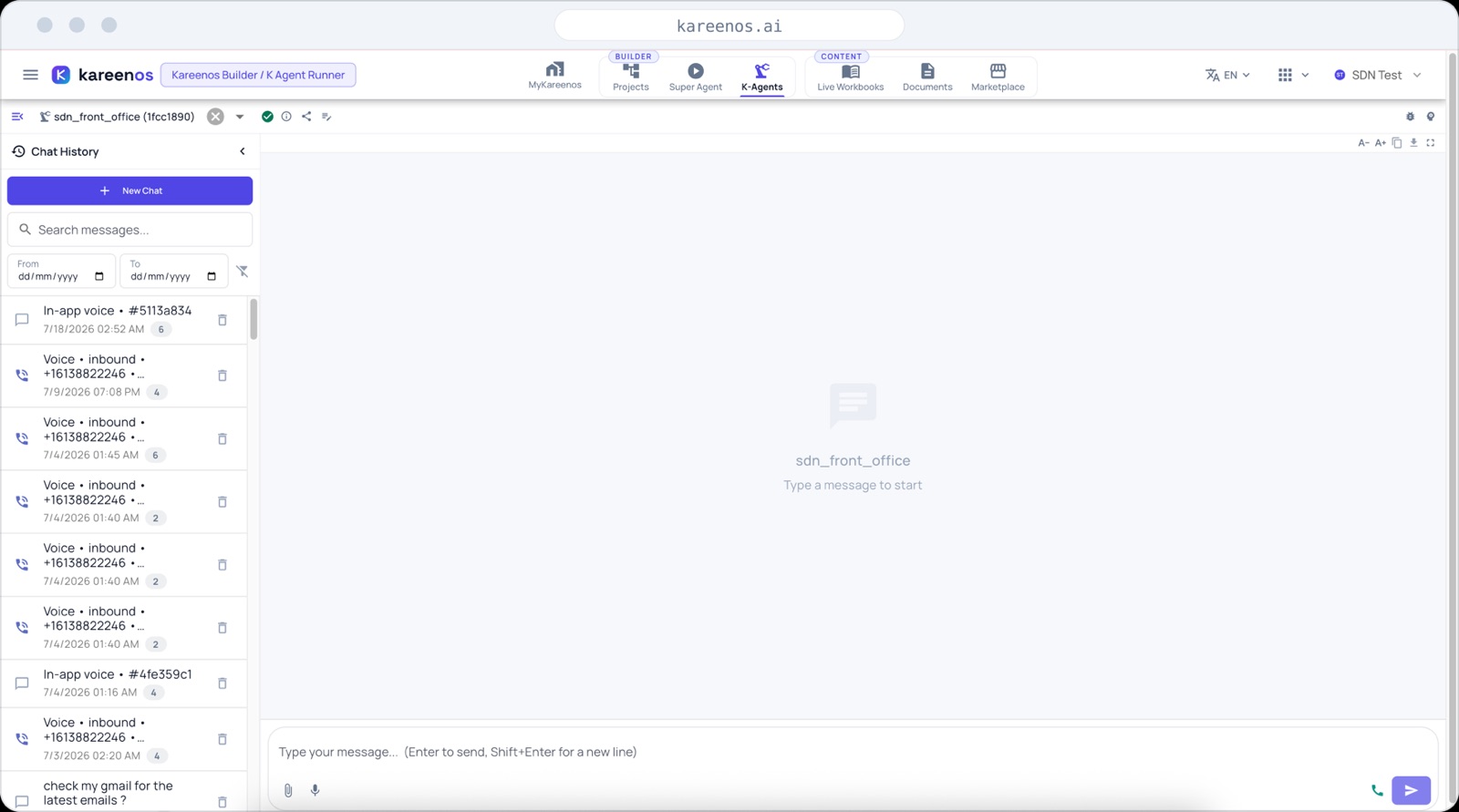
Each K-Agent has a role, a focused job, and the tools to do it. They listen to events, reason about what to do, talk to teams and customers across every channel, and hand deterministic work to jobs. Built by the Super Agent, working for the business.

The data substrate
Agents read them, write them, and react when a cell changes. A row updates and an agent notices; a number crosses a threshold and a workflow fires. Teams and agents work in the same sheets in real time, on three storage engines behind one tool surface.

The knowledge
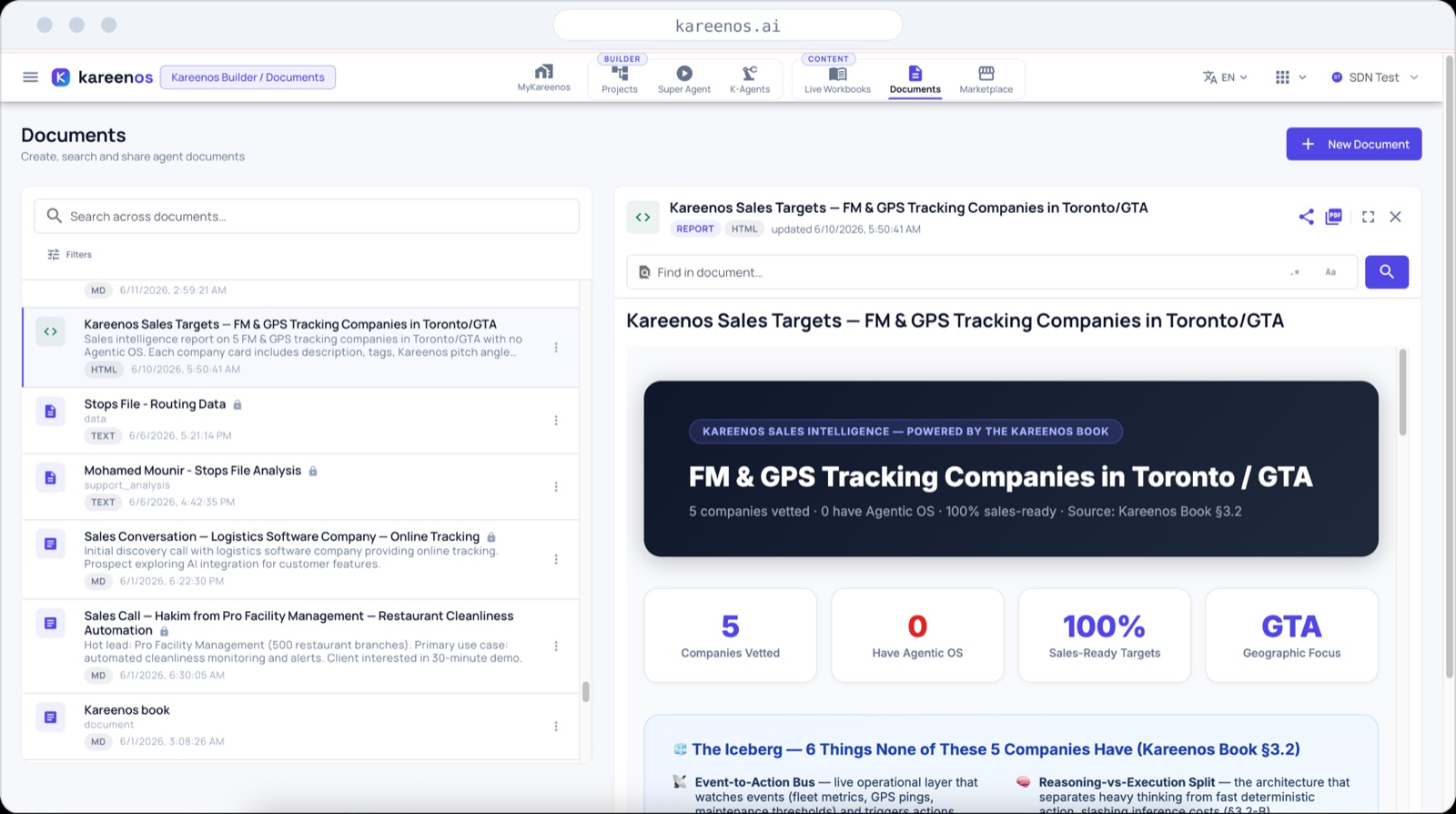
In: your client’s library. Policies, manuals, price lists, contracts. Drop a file in, and every agent in the project knows it. Out: agents write documents too. Reports, briefings, and summaries in clean formats, audit-ready without anyone assembling them.

The engine knows where
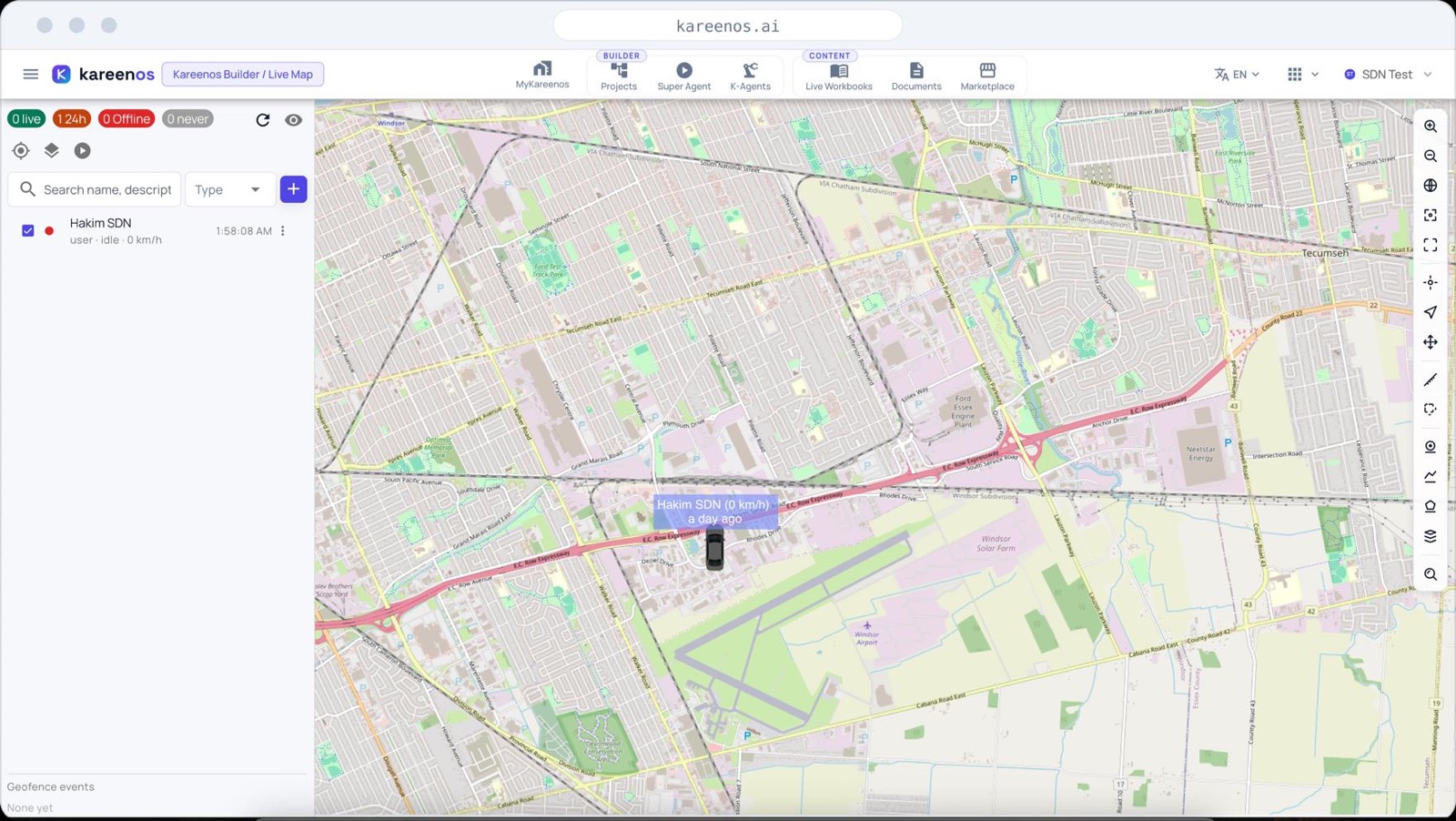
Location, geofences, routes: the engine does not just see coordinates, it understands them. Route optimization across stops, traffic, and time windows; the right people in the right place at the right hours; all reasoned by agents, computed by jobs.

The engine sees
A delivery photo, a camera frame, a damaged package, a site inspection shot. Agents do not just receive images: they understand them, verify them, and act on them. Proof of delivery confirmed. Unauthorized person flagged. Damage documented with evidence attached.

The humans
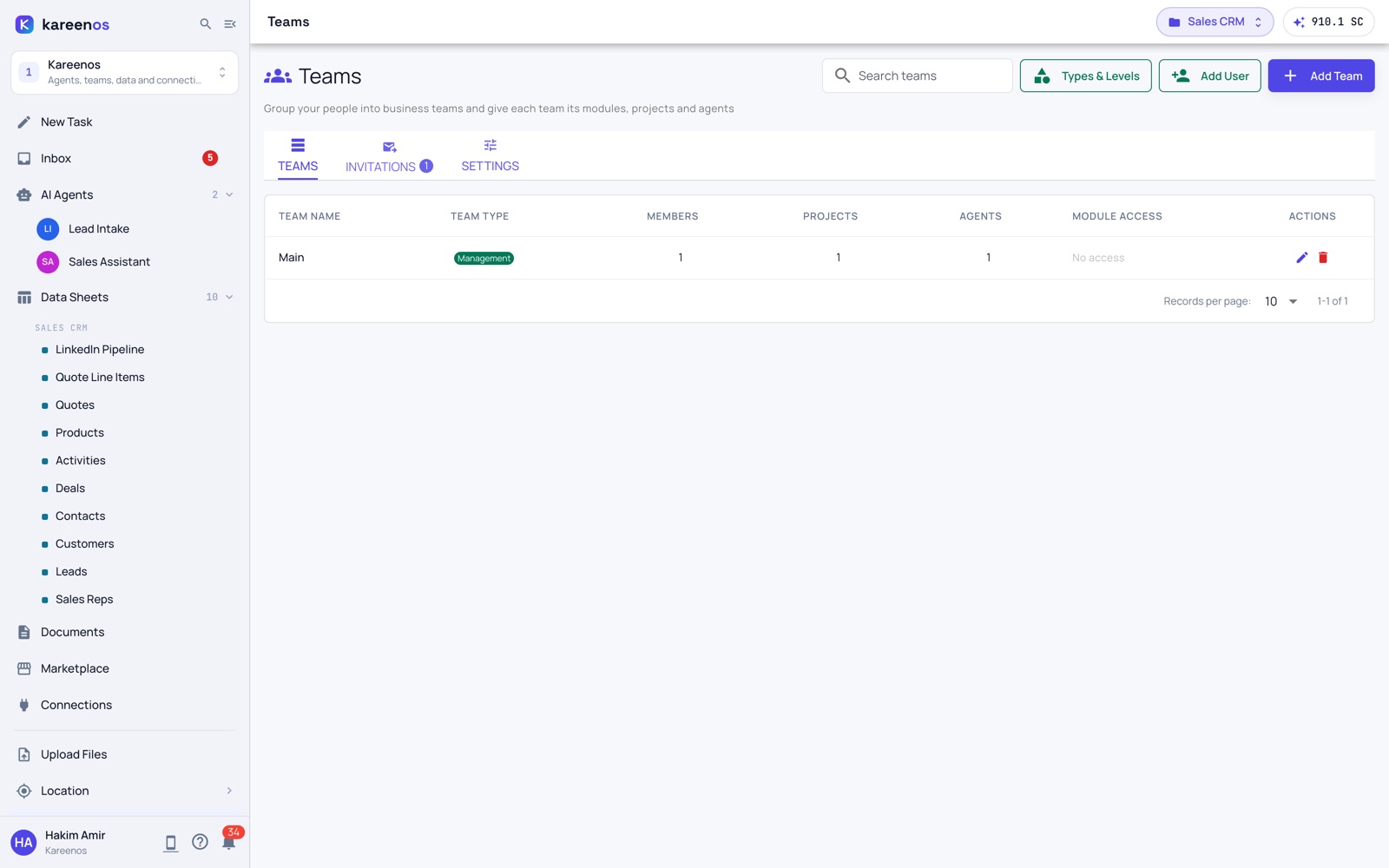
Agents do not replace teams; they work beside them. Field staff, supervisors, dispatchers, managers, all inside MyKareenos. Agents assign tasks, follow up, and escalate. Humans confirm, respond, and decide. The agents run the routine; the humans make the calls.

For you, our software partner
AI models, voice, speech, maps, search, payments, all connected under one umbrella. Your keys, your accounts, your control. Every integration below is live in the platform now, the same catalog your admins see in the API Keys console.

AI Models
Anthropic
Claude models with prompt caching. The platform default.
OpenAI
GPT models, Whisper STT, and vision fallback.
Google Gemini
Gemini models for reasoning and multimodal runs.
DeepSeek
Cost-efficient models for high-volume agent work.
Speech & Audio
Deepgram
Streaming speech-to-text tuned for phone audio, plus TTS.
ElevenLabs
Natural streaming text-to-speech for live calls.
Voice & Telephony
Voice Streaming (Twilio)
Real-time phone calls: callers talk to agents, agents transfer mid-call.
Messaging Channels
Two-way conversations, media, and voice notes.
Telegram
Bots and group coordination.
SMS
Reach anyone with a phone number.
Inbound triggers agents; outbound tracked.
Maps & Location
Google Maps
Geocoding, routing, distance, and GIS tools for agents.
Search
Google Search
Agents research the open web when the job needs it.
Account Linking
Google Workspace
Gmail, Calendar, Drive, and Sheets with per-user OAuth.
Microsoft 365
Outlook mail and calendar with per-user OAuth.
Your platform’s superpowers
Tools you build once, available to every agent, in every project, for every client. Your existing APIs, your core features, your secret sauce, exposed as tools agents can use. Every call is identity-mapped: it runs as that customer, never as a shared login.

The revenue line
A complete billing system. Track every client’s token consumption, your revenue, and your AI provider costs, all in one place. It even helps you design your pricing plans, fully integrated with Stripe. A turnkey solution: revenue from day one.

Full control
Choose your AI providers. Set every client’s limits. Grant every user’s access. Watch every token, every cost, every run, with live system configuration and continuous monitoring dashboards. Nothing hidden, nothing locked away. It’s your engine; you hold the keys.

No black box
The Debugger shows every step: what the agent reasoned, which tools it called, what it cost. Plans show what an agent intends to do before it does it. Todos track what is done, what is pending, what is next. Full insight, full control, on every run.

Under the hood
Everything above runs on the subsystems below. Every one is a shipped part of the engine, not a roadmap item.
The spine
The nervous system of the platform. Operational events become lightweight typed intents on an internal bus: a message arrives, a GPS ping crosses a geofence, a row changes, a schedule slips. Agents and jobs subscribe; nothing is hard-coupled.
event
geofence_exit
Deterministic muscle
Not everything should be an LLM call. K-Jobs run deterministic JavaScript in a resource-limited sandbox, with five trigger types: scheduled, intent, data-change, agent call, and persistent. Agents handle judgment; jobs handle clockwork.
event
payment_overdue
AI Agent · reasons
tone: second reminder → schedule a call
Code Job · executes
Agents reason. Jobs execute.
Your database, activated
Read-only connectors expose your existing Postgres, MySQL, MSSQL, Cassandra, Mongo, REST, or GraphQL systems as live sheets. The Super Agent reads your schema and generates them automatically. Write patterns are rejected by construction.
Read-only · Auto-generated · In place
Where people already are
Inbound messages become intents that wake agents; outbound messages are queued, tracked, and persisted with media. Field staff answer voice notes on WhatsApp; owners get email digests; customers get SMS updates. All of it lands in one conversation history.
Real-time calls
A dedicated real-time audio loop: streaming speech-to-text in, agent reasoning, streaming text-to-speech out. Callers hear the first sentence while the rest is still generating; barge-in interrupts cleanly; agents transfer callers to other agents mid-call.
Caller “…can someone be there before noon?”
Agent “Yes, I’ve got a technician 14 minutes away. Booking him now, you’ll get an SMS confirmation.”
Attended automation
Agents navigate, read, fill, and click in a user’s signed-in browser session, with the user present and a server-held approval gate on sensitive actions. No credentials stored, no headless ghosts: attended automation with an audit trail.
The user’s browser, supervised
Follow-through
An agent can schedule its own future wake-up: “check this quote again Thursday,” “confirm the sub on Sunday evening.” Callbacks are persisted durably, claimed exactly once across replicas, and delivered at-least-once with retry.
Tuesday’s promise, kept Thursday
Continuity
Two tiers: session memory scoped to a conversation, and long-term memory that persists across conversations with TTL. Long runs stay sharp through conversation compaction. Old slices are summarized once, preserving names, decisions, and outstanding work.
Session · Long-term · Compaction
Model-agnostic
One normalized model configuration, translated per provider at request time. Default to Claude with prompt caching; route high-volume work to cost-efficient models; a vision pre-processor closes the gap for text-only models. Upgrade-safe as the model market shifts.
One schema · Every provider
Isolation by construction
Nested tenancy (partner, account, project) with the project as a hard runtime boundary: intents fan out only to same-project listeners. Secrets and tokens are encrypted at rest, with master keys held in your own key management.
Partner → Account → Project
The backbone
Postgres holds the relational truth: agents, projects, workbooks, documents. Cassandra absorbs the volume of messages, memory, events, calls, and files, partitioned per tenant and replicated multi-DC. Stateless web and worker tiers scale horizontally.
Relational truth · Unbounded volume
Yours to run
Three core processes (web server, jobs engine, messaging engine) plus dedicated real-time servers for voice and browser channels. Pull the images into your VPC, on-prem cluster, or cloud account. Connect your database. Brand it. Thirty minutes.
Pull · Connect · Brand · Live
For your engineering team
We'll deploy Kareenos against a sample of your schema before the call. You get the technical deployment spec, the architecture deep-dive, and a working environment to poke at.